Choosing an optical transceiver supplier can shape your network’s performance, maintenance costs, and future upgrade options. The decision deserves more than a quick price comparison. A low quote may hide limited testing, unclear specifications, or weak after-sales support. Real experience often reveals these gaps after installation.
This guide presents seven practical tips for evaluating suppliers with greater confidence. Check product compatibility, optical performance, quality controls, delivery reliability, technical support, warranty terms, and customer feedback. Ask for datasheets, test reports, sample units, and clear information about manufacturing locations. A dependable supplier should explain transmission distance, wavelength, connector type, operating temperature, and equipment compatibility without vague promises.
Look closely at how the supplier handles questions. Do engineers respond with useful measurements, or only marketing language? Request evidence from comparable deployments when possible. Examine packaging, labeling, and traceability during sample evaluation. Small details matter. Still, no supplier is perfect, and impressive documents cannot guarantee flawless field performance. A trial order may expose limitations that a sales presentation conceals. That is not failure; it is useful evidence. By comparing technical expertise, communication quality, and long-term reliability, buyers can select an optical transceiver supplier that supports stable operations rather than creating avoidable problems. The best choice may not be the cheapest. It should be the most transparent, capable, and consistent.
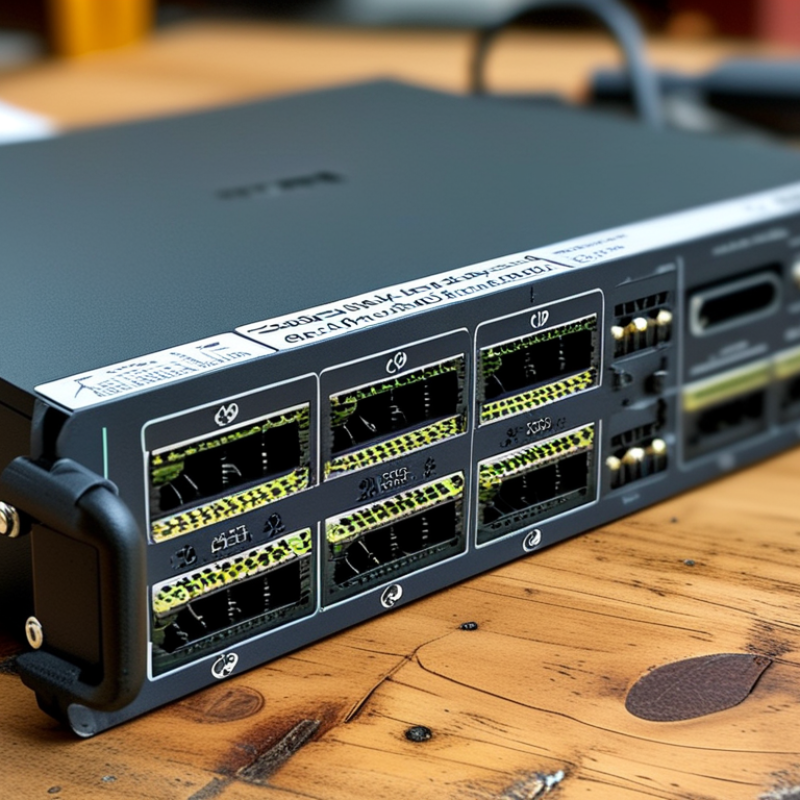
Define Required Specs: 10G–800G Rates, Reach, Wavelength, and Form Factors
An optical transceiver supplier should begin with your actual link requirements, not a generic product list. Define the data rate clearly, from 10G to 800G, and confirm whether traffic is Ethernet, Fibre Channel, or another protocol. A 10G link across a server room differs greatly from an 800G connection between data halls. Record the required reach, including cable routes, patch panels, and future expansion. Measure twice. A short-reach module may use multimode fiber, while longer links often require single-mode fiber and stricter optical budgets.
Wavelength selection also needs practical attention. Common options support different distances, fiber types, and multiplexing designs. Check transmit power, receiver sensitivity, dispersion limits, and operating temperature. Form factors matter just as much. SFP+, SFP28, QSFP28, QSFP-DD, and OSFP modules may fit different port densities and cooling systems. Confirm cage dimensions, host compatibility, electrical lanes, and firmware behavior before purchasing. Ask the supplier for test reports, DOM accuracy, bit error rate results, and interoperability evidence. Experienced suppliers should explain these details without hiding behind a data sheet.
I have seen projects fail because reach was estimated from a straight cable length. That assumption was weak. Connector loss, bends, and aging can change the margin. A dependable supplier should review your topology, provide samples, and support controlled testing under real temperature and load conditions. Requirements sometimes change after installation, so document assumptions and leave measurable headroom.
Check Standards Compliance: IEEE 802.3, MSA, RoHS, and REACH Certification
When choosing an optical transceiver supplier, verify standards compliance before comparing prices.
IEEE 802.3 confirms that modules follow recognized Ethernet requirements for speed, distance, and signaling. However, compliance should match your exact application. A 10G module for short multimode links may not suit a long single-mode connection.
Check the relevant MSA specification, such as SFP, SFP+, QSFP, or QSFP28. MSA alignment improves physical compatibility, but it does not guarantee perfect interoperability. Ask for test records using your switch models, fiber type, and operating temperatures.
Ask for evidence. A certificate alone is not proof.
RoHS documentation helps confirm restricted substances are controlled in the product. REACH declarations show how the supplier manages chemical substance requirements across the supply chain. Request current documents, product-level coverage, and revision dates.
During procurement reviews, I also check serial-number traceability, incoming inspection records, and failure-analysis procedures. These details reveal whether quality control is real or simply advertised.
Be careful with vague claims such as “fully compliant.” Suppliers should identify the tested standard and provide supporting reports. Some documents may cover a product family, not every optical variant. That distinction is easy to miss. It can create delays during audits or deployment.
I would also review warranty terms and replacement procedures, because compliance paperwork cannot repair an unstable link.
Compare Supply Capacity: 100G/400G Production, Lead Times, and Scalability
In supplier assessments, I have learned that production capacity matters more than attractive quotations. Ask how many 100G and 400G transceivers are produced monthly, not just their maximum output. Request recent production records, testing procedures, and failure-rate data. A supplier should explain its assembly lines, testing equipment, and quality controls clearly. Vague answers deserve caution.
Check lead times at three stages: samples, pilot orders, and full-volume shipments. A seven-day sample promise may become six weeks during a capacity shortage. Ask whether key components are stocked or purchased after receiving your order. Confirm the supplier’s average delivery performance over the past six months. Do not trust one perfect delivery record. It may be unusual.
Scalability requires evidence. Review available production lines, trained technicians, equipment utilization, and plans for demand increases. A capable supplier should show how it can move from 100G to 400G volumes without weakening inspection standards. Ask about capacity reservation, backup component sources, and emergency order handling. On-site audits or video inspections can reveal crowded workstations, idle equipment, or manual processes hidden behind polished presentations. I once focused too heavily on monthly capacity and overlooked testing bottlenecks. That mistake changed my evaluation checklist. Also examine packaging, firmware control, traceability, and corrective-action records. Growth is useful only when delivery remains stable.
7 Tips to Choose an Optical Transceiver Supplier? – Compare Supply Capacity: 100G/400G Production, Lead Times, and Scalability
| Supplier Profile |
Typical 100G
Monthly Capacity |
Typical 400G
Monthly Capacity |
100G Standard
Lead Time |
400G Standard
Lead Time |
Ramp-Up Time to
Double Output |
Capacity Reservation
Flexibility |
Best-Fit Use Case |
| Small Specialized Supplier |
1,000–5,000 units |
100–500 units |
4–8 weeks |
8–14 weeks |
8–16 weeks |
Limited |
Low-volume projects, customized specifications, and engineering support |
| Mid-Sized Production Supplier |
5,000–20,000 units |
500–3,000 units |
3–6 weeks |
6–10 weeks |
6–12 weeks |
Moderate |
Regional data centers, telecom projects, and recurring monthly demand |
| Large-Scale Manufacturing Supplier |
20,000–100,000+ units |
3,000–20,000+ units |
2–5 weeks |
4–8 weeks |
4–8 weeks |
High |
Large deployments, multi-site rollouts, and high-volume framework agreements |
| Contract Manufacturing Partner |
10,000–80,000+ units |
1,000–15,000+ units |
4–8 weeks |
6–12 weeks |
6–10 weeks |
High with forecast commitment |
Private-label programs, forecast-based purchasing, and flexible product portfolios |
| Distributor with External Production |
1,000–15,000 units |
100–2,000 units |
1–4 weeks if stocked |
4–10 weeks |
8–16 weeks |
Dependent on upstream factory |
Urgent replacement orders, mixed networking equipment, and small batches |
Evaluation note:
The figures above are practical industry benchmark ranges for standard, qualified optical transceivers. Actual capacity and lead time vary according to form factor, optical reach, wavelength, coding requirements, connector type, testing standards, component availability, order quantity, and forecast accuracy. Before selecting a supplier, request recent production records, a capacity-loading statement, documented lead-time performance, and a written scale-up plan for 100G and 400G demand.
Assess Support and Total Cost: Warranty, Compatibility, RMA Rates, and Lifecycle Service
A supplier’s low unit price can hide expensive support problems. During network upgrades, I have seen one failed transceiver delay an entire maintenance window. Ask for written warranty terms, replacement timelines, and shipping responsibilities. Check whether advance replacement is available for critical links. Be careful. Vague promises are difficult to enforce when equipment fails.
Compatibility requires more than matching connector type and transmission speed. Request test records for your switch models, fiber types, distances, and operating temperatures. The supplier should explain coding options and firmware behavior clearly. For dense installations, confirm power consumption and heat output before ordering. I would also request sample units for controlled testing. Small mismatches create costly delays.
RMA data reveals a supplier’s operational maturity. Ask for recent RMA rates, common failure causes, and average resolution time. A low rate is useful, but the calculation method matters. Review response times, failure analysis, and replacement tracking. Lifecycle service should cover firmware updates, technical documentation, and product-change notices. One weakness remains: suppliers may overpromise long-term availability. That deserves direct questioning. Choose evidence over polished sales language, and record every support commitment in the contract.
7 Tips to Choose an Optical Transceiver Supplier: Support and Total Cost Assessment
Compare supplier profiles using warranty coverage, compatibility validation, RMA performance, and lifecycle service. The score is normalized to 100, with lower RMA rates receiving higher scores.
A practical evaluation should balance upfront price with long-term operating risk. Stronger warranty terms, broader compatibility testing, lower RMA rates, and longer lifecycle support can reduce replacement costs, deployment delays, and maintenance effort.
Warranty:
1–5 years
Compatibility:
92–99% validation rate
RMA rate:
0.6–2.8%
Lifecycle service:
3–10 years
Conclusion
Choosing the right optical transceiver supplier requires more than comparing prices. Begin by defining your network requirements, including data rates from 10G to 800G, transmission distance, wavelength, and compatible form factors. Confirm that each product meets relevant IEEE 802.3 and MSA specifications, along with RoHS and REACH requirements. A dependable supplier should also demonstrate strong quality controls, including bit error rate testing, digital diagnostic monitoring, and reliability evaluations aligned with Telcordia GR-468.
Supply capability is equally important. Review production capacity for 100G and 400G modules, expected lead times, inventory planning, and the ability to scale as demand grows. Finally, assess total cost through warranty coverage, equipment compatibility, return and replacement rates, and long-term lifecycle support. A supplier that combines verified performance, stable delivery, responsive technical assistance, and transparent service policies can help reduce deployment risks and support reliable network growth.

 Transolix