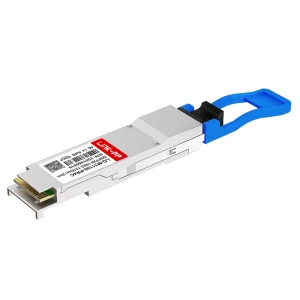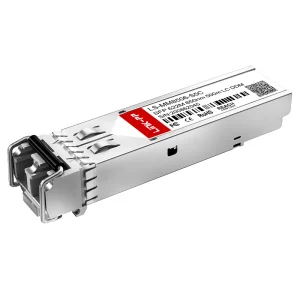
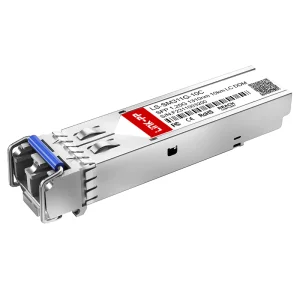
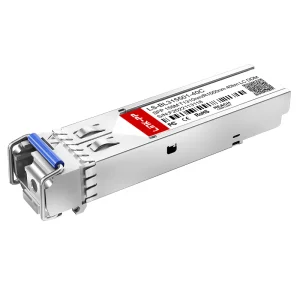
The telecommunications and enterprise networking landscape is undergoing a tectonic shift driven by the rapid rise of Artificial Intelligence (AI) compute clusters, High-Performance Computing (HPC), and 5G deployment. At the heart of this optical revolution is the Fibre Optic SFP (Small Form-factor Pluggable) Transceiver, a hot-swappable I/O device that links a network switch or router interface to a fiber optic transmission cable. In modern hyperscale data centers, transceiver latency, power efficiency, and signal integrity are direct bottlenecks for computational scale.
Market Trend Insight: Current estimations project that the global optical transceiver market will surpass $20 billion by 2028, with high-speed transceivers (100G, 400G, 800G, and emerging 1.6T form factors) representing the fastest-growing sector. Industry consortiums and Multi-Source Agreements (MSAs) are driving standardization, allowing multi-vendor ecosystems to co-exist natively.
For system architects and procurement teams, sourcing components that deliver the right blend of reliability and cost structure is critical. SFP cages, physical connectors, and hot-pluggable optical engines must perform under rigorous continuous duty cycles, ensuring a low Bit Error Rate (BER) and optimal thermal dissipation profiles.
China has transitioned from an optical assembly hub to the primary global cluster for optical transceiver research, development, and vertical integration. Major manufacturing corridors in Wuhan (China's Optics Valley), Shenzhen, and Dongguan offer an unparalleled supply chain configuration that encompasses raw wafer semiconductor processing, optoelectronic packaging (TO-can, COB, BOX), and highly automated active testing processes.
This concentrated ecosystem guarantees access to essential chipsets (laser diodes, photodiodes, DSP controllers) and precision metal enclosures. Consequently, Chinese manufacturers can supply high-quality, MSA-compliant components at scale, providing global operators with critical lead-time advantages.
Transolix is a professional optical transceiver manufacturer specializing in high-performance fiber optic communication solutions for global data centers, telecom operators, and enterprise networks. With strong engineering capabilities and scalable production capacity, Transolix is committed to delivering reliable, high-speed, and cost-effective optical connectivity products worldwide.
Established in 2016, Transolix operates from a specialized 320㎡ high-precision laboratory and cleanroom assembly headquarters. Focusing on cross-border B2B markets, the firm exports between $8 million and $15 million annually. Backed by 11 years of deep optoelectronics expertise and 6 years of international trade history, Transolix serves leading telcos, Tier-2 hyperscalers, and OEM/ODM partners in North America, Europe, Southeast Asia, and the Middle East.
Innovation is driven by 128 core R&D engineers, resulting in the release of 86 new models last year alone. Transolix supports full physical-layer customization, including optical wavelength shifting, form-factor variations (SFP, SFP+, QSFP28, QSFP-DD), reach limits, firmware microcoding, and protocol compatibility. This capability is anchored by a secure network of 860 certified upstream material vendors, ensuring steady access to high-grade wafers, silicon engines, and SFP cage components.
Below is a comparison of optical form factors and transceiver technologies utilized in modern networking architectures. Selecting the right transceiver involves balancing speed requirements, distance criteria, and target budget goals.
| Form Factor | Data Rates | Modulation | Optimal Wavelengths | Typical Transmission Distance | Primary Application Fields |
|---|---|---|---|---|---|
| SFP | 100 Mbps to 4 Gbps | NRZ | 850nm / 1310nm / 1550nm | 100m (MMF) to 80km (SMF) | Legacy enterprise switch interfaces, FTTH networks |
| SFP+ | 10G / 25G (SFP28) | NRZ | 850nm / 1310nm / BiDi | 300m (MMF) to 40km (SMF) | Enterprise core networks, 5G wireless fronthaul |
| QSFP28 | 100 Gbps | NRZ / PAM4 | 1310nm / CWDM4 / LAN-WDM | 100m to 40km | Hyperscale leaf-spine connections, telecom backbones |
| QSFP-DD | 400 Gbps / 800 Gbps | PAM4 / Coherent | 850nm / 1310nm / C-Band | 100m to 120km (ZR) | AI cluster fabrics, high-performance computing centers |
For critical networking infrastructure, a single module failure can trigger costly system downtime. Transolix addresses this with an ISO 9001-certified factory inspection process run by 42 dedicated quality assurance professionals. We conduct 100% automated inspection sequences for every optical transceiver and structural assembly component we ship.
Automated Optical Testing: Validates center wavelength, spectral width, and side-mode suppression ratio (SMSR).
Eye Diagram Analysis: Ensures signal integrity, jitter compliance, and sufficient mask margin values.
Reliability Aging: Subjects components to high-temperature burn-in cycles (under load) to eliminate early-stage component defects.
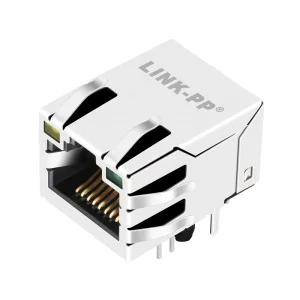
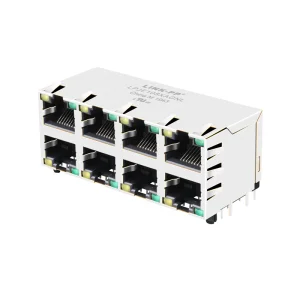
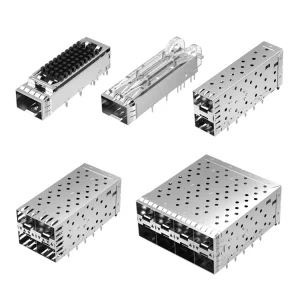
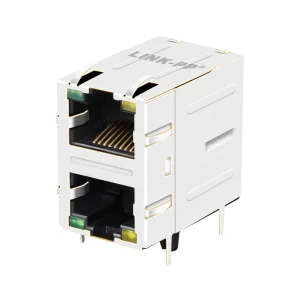
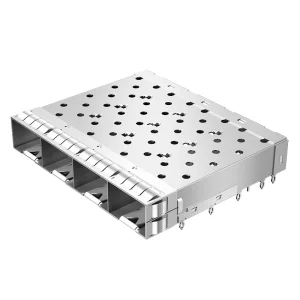
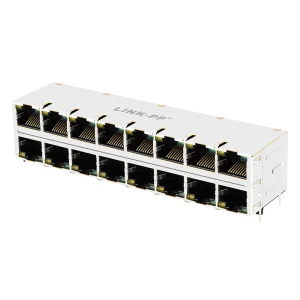
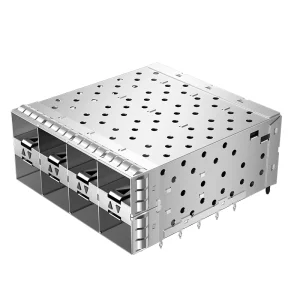
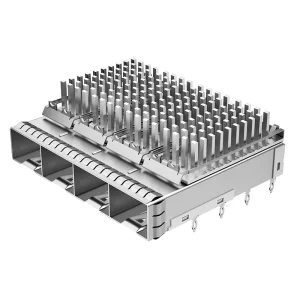
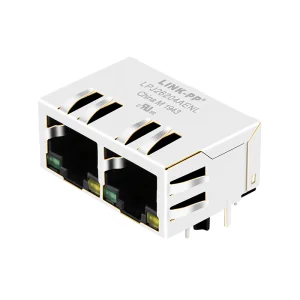
Transolix's integration expertise extends to physical layer protection. High-speed signals running through SFP ports require robust shielding to prevent Electromagnetic Interference (EMI). Our structural SFP cages and multi-port stacked RJ45 connectors feature integrated grounding tabs and press-fit mounting legs, delivering exceptional EMI shielding and structural reliability.
Our quality control protocols test transceivers under simulated high-density environments. This verifies that our copper and optical SFP products meet or exceed the performance benchmarks of top original equipment manufacturers.
As data transmission demands grow, traditional pluggable transceivers face physical power density and thermal challenges. Silicon Photonics (SiPh) technology is emerging as a solution, integrating optical components onto silicon platforms to reduce power draw, footprint, and assembly complexity.
CPO architecture merges the optical engine directly onto the ASIC substrate. This shortens high-speed copper traces, minimizes signal degradation, and reduces energy consumption by up to 30%. SFP cages and transceivers continue to play a key role as edge interfaces in these hybrid CPO topologies.
Ruggedized computing requires optical components capable of operating in extreme conditions. Transolix manufactures industrial-grade transceivers engineered to perform reliably from -40°C to 85°C. These modules feature hardened packages and robust EMI shielding to protect edge links from electrical interference.
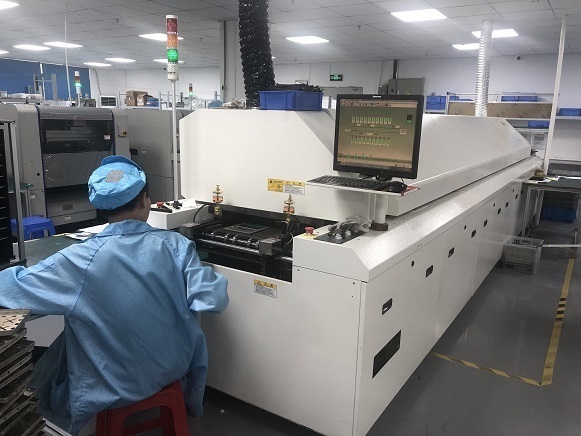
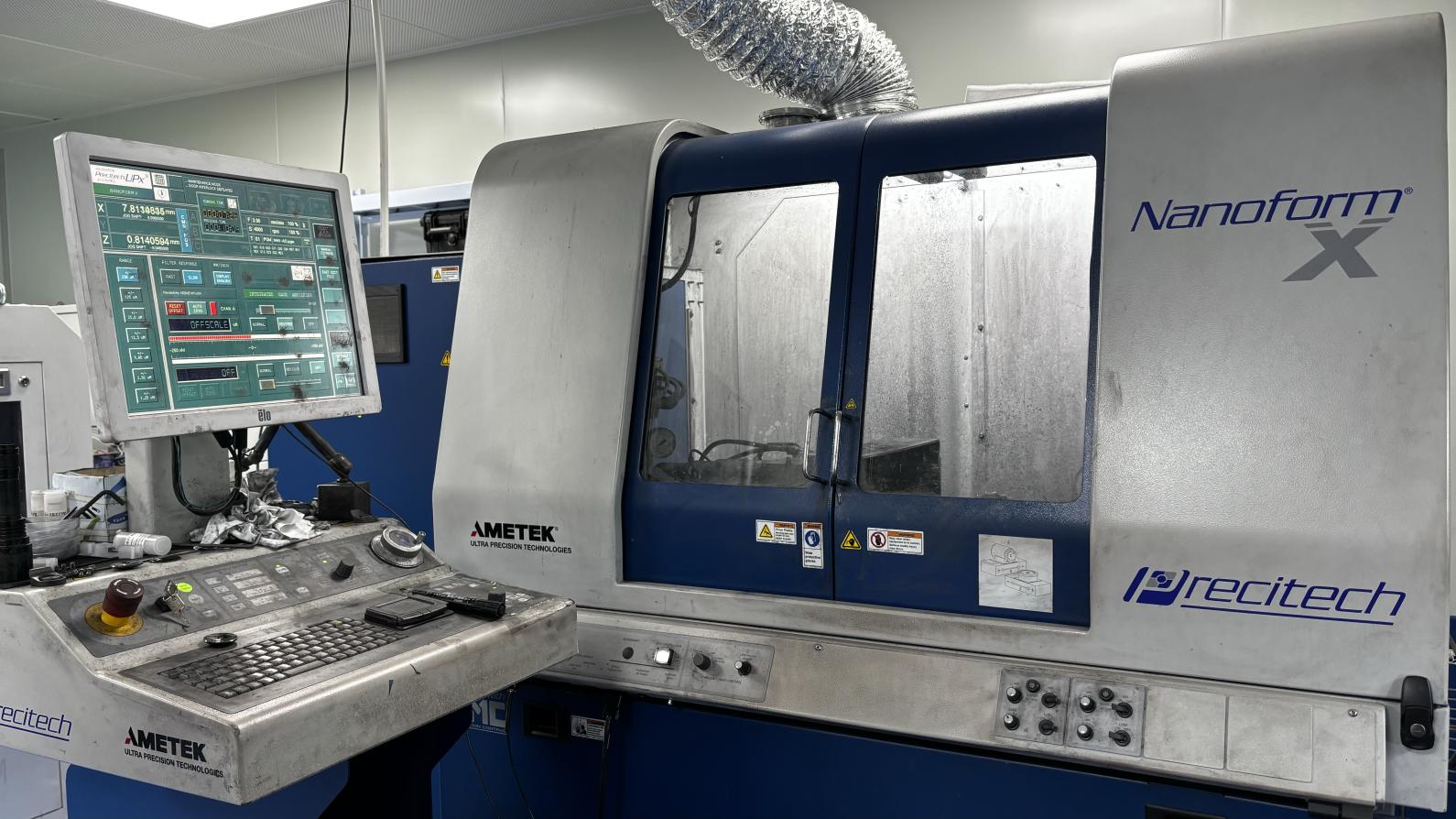
A visual overview of Transolix's production floor, cleanroom assembly lines, QA labs, and testing departments, showing our commitment to manufacturing precision and quality.




 Transolix