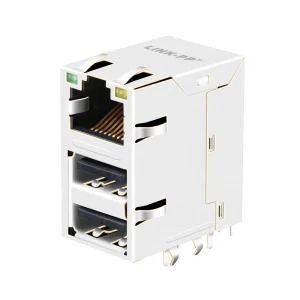
Explore our catalog of advanced optical and physical interface solutions. Designed under MSA standards, our optical modules and integrated jacks deliver optimal performance under demanding environmental parameters.
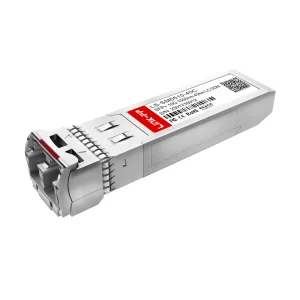
The global telecommunications and datacom landscape is undergoing a monumental architectural shift. The rise of machine learning (ML) models, generative AI architectures, distributed cloud computing, and the acceleration of 5G Standalone (SA) core deployments have placed immense pressure on physical-layer infrastructure. Within these modern software-defined networks (SDN), the SFP (Small Form-factor Pluggable) optical transceiver remains the critical pivot point where optical and electrical signals converge.
Today, the commercial demand for transceivers is marked by a dual-track development. While hyperscale data centers are aggressively pushing boundaries from 100G (using QSFP28 form factors) to 400G and 800G (utilizing QSFP-DD and OSFP packages), metro networks, enterprise backbones, and industrial access networks still rely heavily on 1.25G, 2.5G, and 10G SFP+ modules. Crucially, these operators seek highly reliable partners capable of providing cost-effective, long-distance options (such as Single Mode 1550nm 40km or CWDM multi-wavelength solutions) that minimize link budget penalties while sustaining a low Total Cost of Ownership (TCO).
Selecting the right module involves balancing optical power budgets and dispersion limitations. For example, a 10G SFP+ 40km SMF module running on a 1550nm wavelength avoids the high attenuation of 1310nm wavelengths over extended distances. However, it requires precise dispersion management to maintain high signal integrity without additional amplifier configurations.
Transolix is a professional optical transceiver manufacturer specializing in high-performance fiber optic communication solutions for global data centers, telecom operators, and enterprise networks. With strong engineering capabilities and scalable production capacity, Transolix is committed to delivering reliable, high-speed, and cost-effective optical connectivity products worldwide.
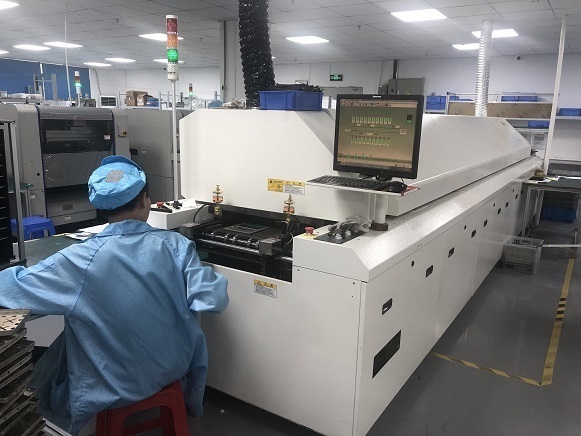
Our ISO 9001 quality system is maintained by 42 QA professionals. Every module undergoes automated optical testing, eye diagram analysis, thermal chamber aging, and 100% final performance verification on target network switches.
Driven by 128 R&D engineers, we released 86 new models last year alone. Our capabilities range from custom EEPROM memory programming to fine-tuning optical wavelengths, distances, and form factors to meet specific client needs.
With 860 certified upstream supply chain partners (including leading chipset, optical sub-assembly, and packaging manufacturers), we guarantee low lead times and consistent product availability for international operations.




The optical transceiver industry is moving toward higher data density, lower energy footprints, and smarter diagnostics. Transolix is leading this evolution by aligning our R&D roadmap with the following technological trends:
To move past the limits of NRZ modulation at high frequencies, our newer architectures use 4-Level Pulse Amplitude Modulation (PAM4) and coherent optical tech. This delivers double the data rate per clock cycle, making it ideal for 100G and 400G deployments.
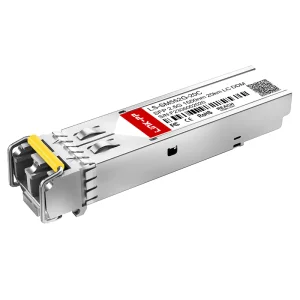
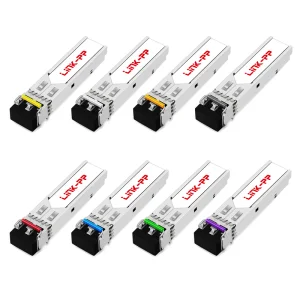
To maximize fiber plant efficiency, our CWDM (Coarse Wavelength Division Multiplexing) SFP modules utilize multiple channels from 1270nm to 1610nm. This allows operators to scale bandwidth over single-mode fiber (SMF) without deploying additional cables.
Every modern optical transceiver we manufacture features DOM/DDM interfaces. This allows real-time monitoring of critical metrics like optical output power, receiver sensitivity, operating temperature, and laser bias current to prevent unexpected link failures.
Transolix engineered solutions cater to specific infrastructure environments, ensuring seamless integration, high system uptime, and long-term durability.
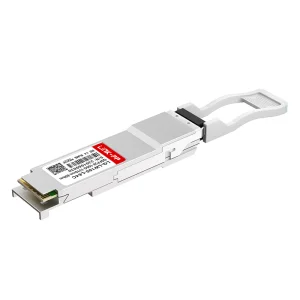
Our 100G QSFP28 ER4 and high-speed SFP+ modules enable efficient spine-leaf architectures. The modules are optimized for low thermal dissipation, reducing the power cooling costs typical of hyperscale data centers.
For long-haul and metropolitan transport networks, we offer Duplex LC SMF transceivers operating at 1550nm up to 40km and 80km. They deliver consistent signal performance across wide operating temperatures.
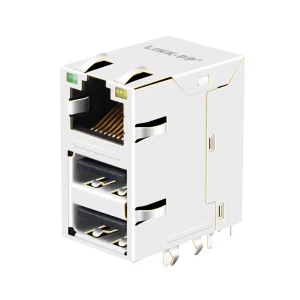
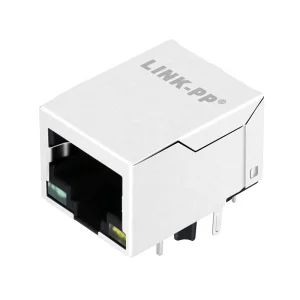
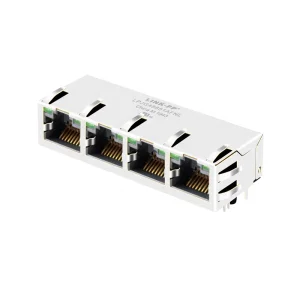
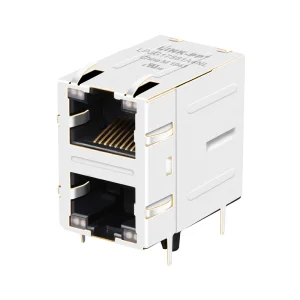
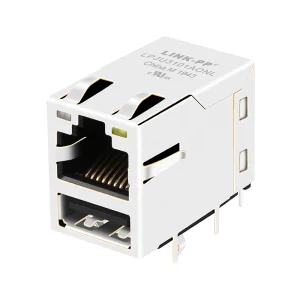
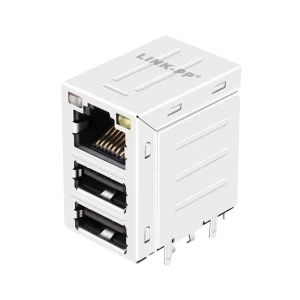
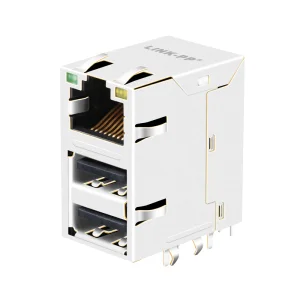
Through-hole press-fit connectors, shielded RJ45 magnetic jacks with LEDs, and copper SFP transceivers allow enterprise IT departments to optimize local area networks (LANs) and edge configurations easily.
Below, our R&D engineers address common technical queries raised by network engineers, data center administrators, and purchasing managers.
The choice depends on the target distance and link budget. The 1310nm wavelength has lower dispersion on standard SMF (G.652) but higher attenuation (approx. 0.35 dB/km). In contrast, the 1550nm wavelength has lower attenuation (approx. 0.2 dB/km) but higher dispersion. This makes 1550nm ideal for longer distances, such as 40km or 80km, but it requires higher-quality laser components (like EML or DFB lasers) to manage chromatic dispersion.
We operate a dedicated switch compatibility laboratory with target hardware from Cisco, Arista, Juniper, HP, Dell, and others. We read, analyze, and program the EEPROM memory (complying with MSA standards SFF-8472 and SFF-8436) to write correct manufacturer codes and checksums. This ensures a seamless "plug-and-play" experience and prevents "unsupported transceiver" errors.
Integrated Mag-jacks (such as the LPJG48851AFNL or HR872635H) feature built-in isolation transformers and common-mode chokes. These components shield the physical layer (PHY) chip from electromagnetic interference (EMI) and electrostatic discharge (ESD). They prevent signal integrity issues and protect sensitive optoelectronic components downstream.
CWDM (Coarse Wavelength Division Multiplexing) allows operators to combine up to 18 channels on a single pair of fibers. Each channel operates at a different wavelength (from 1270nm to 1610nm, spaced 20nm apart). By using passive CWDM multiplexers, network operators can scale capacity without laying additional expensive optical fiber.
Eye diagram analysis superimposes multiple electrical and optical waveforms to evaluate noise, jitter, and rise/fall times. By testing 100% of our products with high-frequency oscilloscopes, we verify that the "eye" remains wide open. This guarantees low bit error rates (BER) and reliable signal transmission over the module's lifetime.
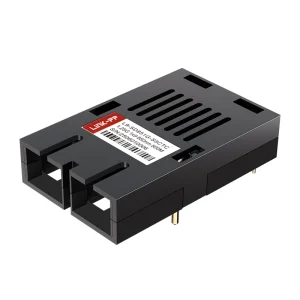
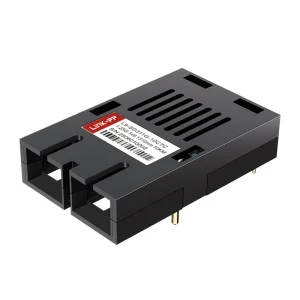
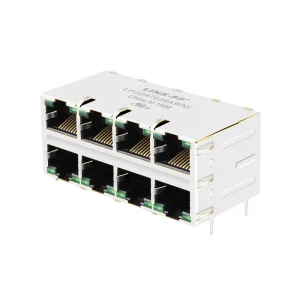
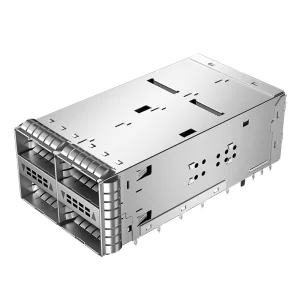
Review our selection of connector cages, legacy 1x9 transceivers, and stacked RJ45 configurations. These components are designed for high shielding efficiency, low contact resistance, and reliable physical-layer connections.
 Transolix