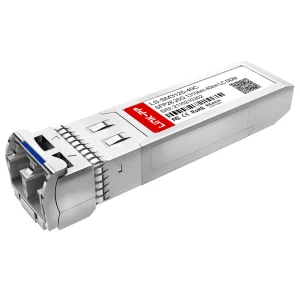
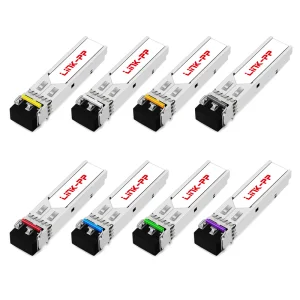
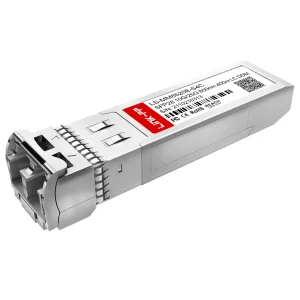
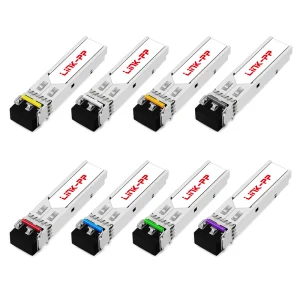
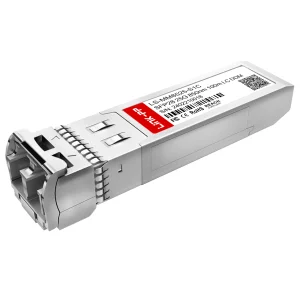
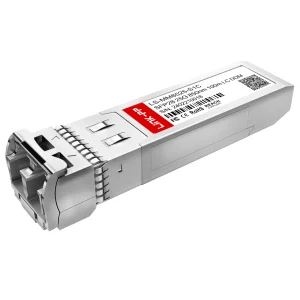
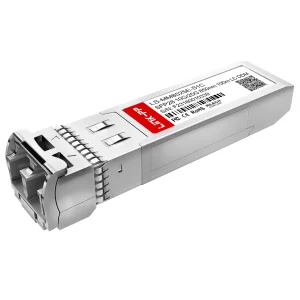
Optimized for Portugal's expanding high-bandwidth metro rings and critical edge data center configurations. These four initial modules provide essential compatibility and high throughput for operators deploying networks in Lisbon, Porto, and Sines.
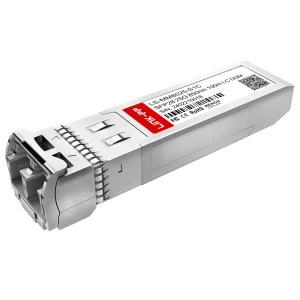
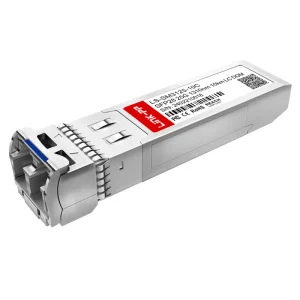
Portugal has rapidly established itself as a key strategic gateway for European digital connectivity. Driven by the "Portugal Digital" national action plan, the country is transforming its telecommunications infrastructure. Key hubs like Sines Tech, home to major data center initiatives such as the Start Campus project, and the deployment of deep-sea cables like the *EllaLink* (linking Europe to South America) and *Equiano*, have placed Portugal at the absolute center of intercontinental traffic routing.
This massive influx of international data demands extremely robust, low-latency metro transport and distribution networks. In local Portuguese exchanges run by MEO, NOS, and Vodafone Portugal, legacy 10G backhauls are no longer sufficient. 25G SFP28 and 32G SFP28 Fibre Channel (FC) modules represent the most logical migration path, utilizing existing optical distribution networks (ODN) and fiber plants without incurring the prohibitive costs and power requirements of a full 100G migration at the distribution layer.
Our solutions cater directly to these Portuguese industrial developments, ensuring fully tested, high-compatibility physical links that maintain network integrity across heterogeneous equipment architectures in Lisbon, Porto, and the Algarve region.
The global transceiver market is transitioning toward higher densities and optimized interfaces. While hyperscale cloud networks target 400G and 800G, the carrier access network, 5G fronthaul, and mid-tier storage area networks (SAN) rely on the efficiency of the SFP28 form factor. Operating on a single channel of 25 Gbps (with NRZ modulation) or 32 Gbps (specifically for Fibre Channel applications), SFP28 provides crucial advantages:
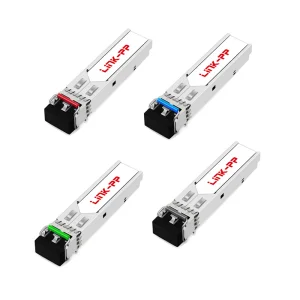
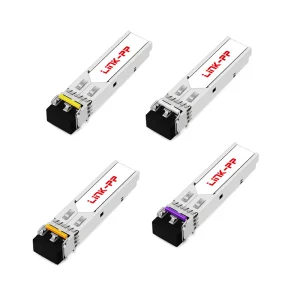
These bidirectional (BiDi) and wavelength-division multiplexing (CWDM) modules are engineered to optimize fiber utilization in dense urban corridors like Lisbon-Sintra and Porto-Vila Nova de Gaia.
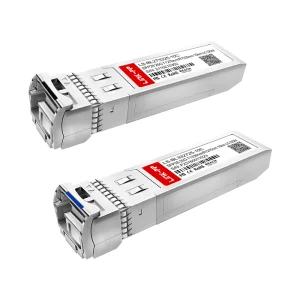
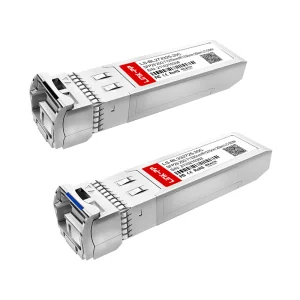
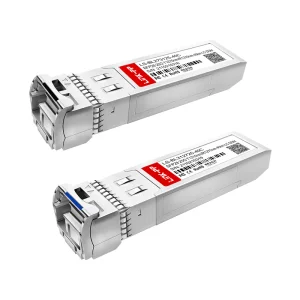
Portuguese mobile networks require high-frequency, low-latency connectivity to coordinate distributed radio heads. By using our 25G BiDi transceivers, telecommunications engineers can double bandwidth capacity instantly over a single optical channel. Working at 1270nm and 1330nm, these modules enable simultaneous duplex communication on one strand of fiber, saving significant optical leasing costs across metropolitan centers.
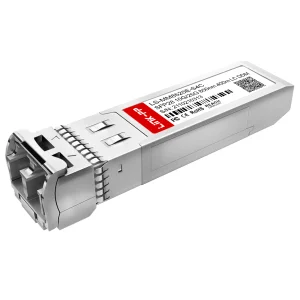
Financial clusters in Lisbon, requiring continuous real-time backup capabilities, rely heavily on 32G Fibre Channel links. Upgrading local storage rings to 32G SFP28 reduces transmission latency and maximizes I/O operations per second (IOPS), facilitating seamless synchronous replication between core data vaults and secondary backup nodes in central Portugal.
The emerging hyperscale projects in Sines demand dynamic interconnect options between main switch matrices and regional nodes. Utilizing 25G CWDM and DWDM SFP28 modules, operators multiplex up to 40 channels over a single fiber pair, eliminating the need to trench additional underground fibers. This configuration guarantees investment protection and supports scalable future expansion.
Transolix is a professional optical transceiver manufacturer specializing in high-performance fiber optic communication solutions for global data centers, telecom operators, and enterprise networks. With strong engineering capabilities and scalable production capacity, Transolix is committed to delivering reliable, high-speed, and cost-effective optical connectivity products worldwide.
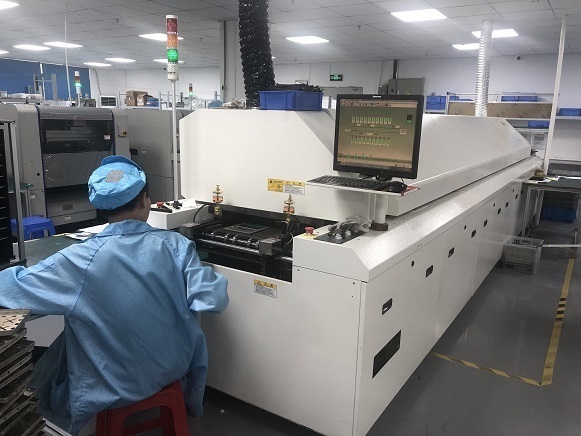
Every single SFP28 module leaving our facility undergoes a rigorous, multi-tiered testing regimen to guarantee compatibility, reliability, and precision optical power output:
Leveraging partnerships with 860 certified upstream suppliers, including premium semiconductor and laser diode vendors, Transolix ensures stable lead times for European network builds. Our custom options support tailored firmware coding, custom optical wavelengths, and protocol adjustments to support specialized network environments.





As Portugal proceeds with the deployment of advanced Wi-Fi 7 hubs and edge AI computation, the demand for aggregate interface density grows. Transolix has mapped out a clear progression route for optical link technology:
Improving the power footprint of 25G/32G SFP28 modules down to less than 1.0 Watt. Fine-tuning the digital diagnostic interfaces (DDM) to support microsecond-level telemetry reporting directly to SDN controllers.
Leveraging PAM4 (Pulse Amplitude Modulation 4-level) to double the data rate within the SFP physical layout. This allows upgrading to 50G without modifying existing patch panels or cable structures.
Utilizing a dual-channel design, SFP-DD scales optical links to 100G per port, facilitating ultra-high port densities in compact space-constrained edge locations across Portugal.
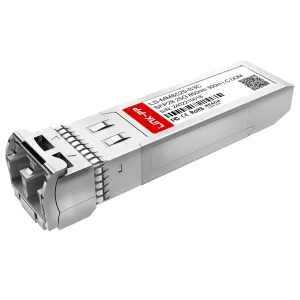
Select from our complete range of certified SFP28 optical modules designed to fulfill complex carrier-grade specifications, high-performance computing requirements, and enterprise architectures.
 Transolix