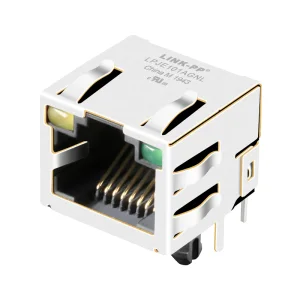
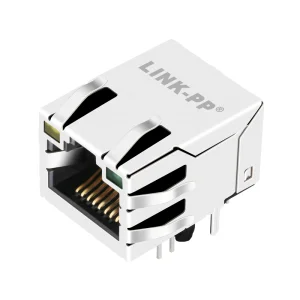
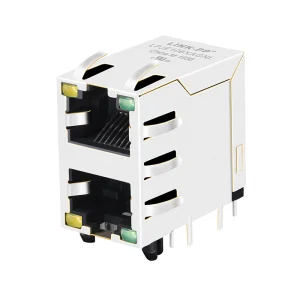
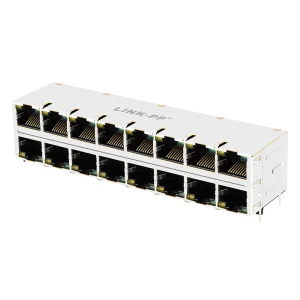
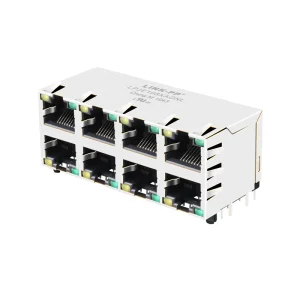
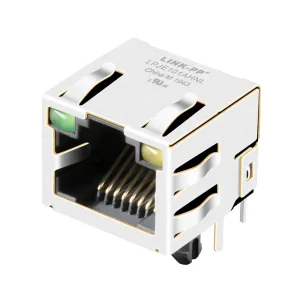
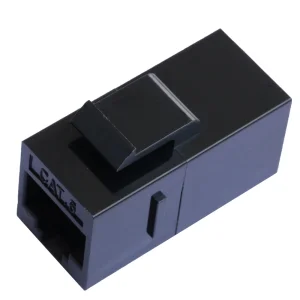
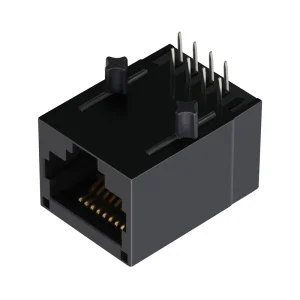
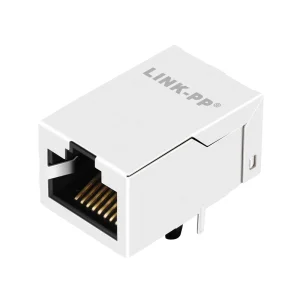
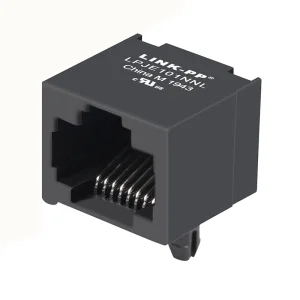
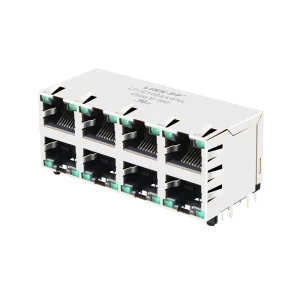
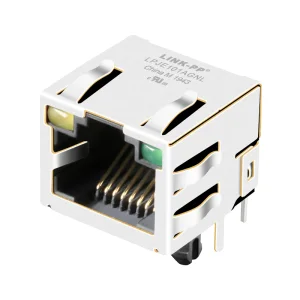
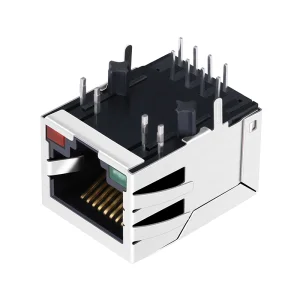
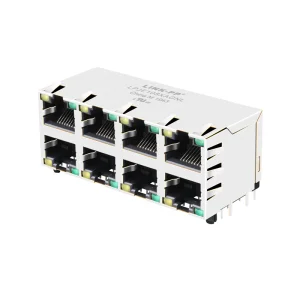
Industrial-grade, unshielded and shielded passive modular jacks optimized for custom physical layer implementations and high-frequency communication protocols.
In the age of rapid digitalization, high-speed internet routing, cloud computing, and advanced manufacturing networks, the physical interfaces that bind copper media to circuit boards are critical. RJ45 without magnetics connectors represent a fundamental building block of custom hardware design. Unlike Integrated Connector Modules (ICMs) or "MagJacks," which contain internal transformers and common-mode chokes, these connectors function as clean, passive routing portals. This separation offers system architects the design freedom to optimize their circuit layouts, place custom magnetic isolation modules closer to PHY (Physical Layer) chipsets, and reduce overall profile heights on crowded PCBs.
Why do tier-one networking equipment manufacturers in New York and globally select RJ45 jacks without internal magnetics? The answers lie in signal integrity, space allocation, thermal design, and electrical performance:
Operating a manufacturing or R&D facility in New York requires a reliable supply chain. Sourcing active and passive components globally has faced headwinds in recent years, making lead times, consistency in material quality, and compliance (RoHS, REACH, UL) major strategic concerns. As a manufacturer and supplier with deep roots in optical and copper networking systems, Transolix bridges this gap by offering precision-engineered RJ45 solutions. While our engineering team develops next-generation optical transceivers, we maintain a robust inventory of high-quality, long-lifecycle copper interconnect components that serve the telecom, server, and networking industries across North America, Europe, and Asia.
Established in 2016, Transolix has grown from a specialized high-speed optical transceiver manufacturer into a comprehensive networking component partner. Serving telecom operators, cloud providers, and data center integrators worldwide, we couple advanced R&D with rigid quality control.
| Annual Export Revenue | USD 8 – 15 Million |
| Building Area | 320 m² |
| Upstream Supplier Partners | 860+ Certified Vendors |
| Main Markets | North America, Europe, APAC, Middle East |
Designing a system that incorporates an RJ45 without magnetics connector requires careful coordination of the physical trace routing between the connector pins, the external magnetic transformer block, and the transceiver PHY chip. Standard Ethernet applications demand 100-ohm differential impedance. Without integrated transformers inside the metal jack housing, the physical trace routing on the host PCB must act as the primary defense against electromagnetic interference (EMI).
Traces running from the RJ45 jack contacts to the discrete transformer must maintain tight differential coupling. Any variation in trace width or separation distance can introduce impedance discontinuities, leading to signal reflection and high return loss. PCB layout engineers should target a 100 Ω ±10% differential impedance for standard Cat5e or Cat6 data transmission. Traces should be routed on the top layer without vias to prevent impedance mismatches.
The discrete transformer should be placed as close to the RJ45 without magnetics connector as mechanically possible. Minimizing this distance reduces the length of the unshielded, unfiltered differential traces, which are susceptible to picking up system-level noise from adjacent components like switching power regulators, processors, or memory modules.
In New York's industrial and outdoor telecom deployments, ESD poses a constant risk to internal circuitry. When using a passive RJ45 jack, designers must implement transient voltage suppressors (TVS diodes) on the secondary (PHY) side of the discrete magnetics. This arrangement clamps transient voltages to safe levels before they reach the sensitive input/output pins of the ethernet transceiver chip.
For shielded versions of the RJ45 connector, the metal shell must be electrically bonded to the chassis ground of the device. This provides a direct path for high-frequency common-mode noise to dissipate. Multiple low-impedance ground paths (such as stitching vias along the shield pins of the RJ45 jack) must connect the shell ground to the chassis ground ring, separating it from the signal ground plane by a physical isolation gap.
Complete list of our high-quality connector models. Click on any model to view technical data sheets and order samples.
Answers to common design, engineering, and logistical questions for procurement managers and hardware design engineers.
Standard integrated modular jacks (MagJacks) contain internal wire-wound toroidal transformers, common-mode chokes, and resistors/capacitors to handle isolation and filter noise inside the metal body. RJ45 connectors without magnetics consist of only the housing, internal metal contact pins, and (optional) LED light pipes and shielding panels. They contain no internal filtering or magnetic components, requiring these networks to be designed separately on the PCB surface.
Yes, absolutely. RJ45 connectors without magnetics are compatible with all ethernet speeds, including 10/100 Mbps, 1 Gbps, 2.5 Gbps, 5 Gbps, and 10 Gbps. The maximum achievable speed depends entirely on the high-frequency design of the PCB traces, the choice of the external discrete magnetic module, and the capabilities of the Ethernet PHY transceiver.
Yes, but the Power over Ethernet power extraction must be configured on the host PCB. In integrated systems, PoE pins tap directly off the transformer's center taps. With passive connectors, you must route the corresponding wire pairs to discrete PoE-compatible transformers and supply-coupling circuits on your board.
Transolix offers comprehensive design adjustments, including variations in LED light colors (Green, Yellow, Red, or bi-color), shielding formats (with or without EMI grounding tabs), mounting angles (vertical vs. right-angle), and mechanical layouts (Through-Hole vs. Surface Mount - SMT). We also offer customization for low-run pilot projects in the upstate New York research corridor.
Our ISO 9001-certified production base is equipped with state-of-the-art testing stations, automated assembly lines, and rigorous validation chambers.
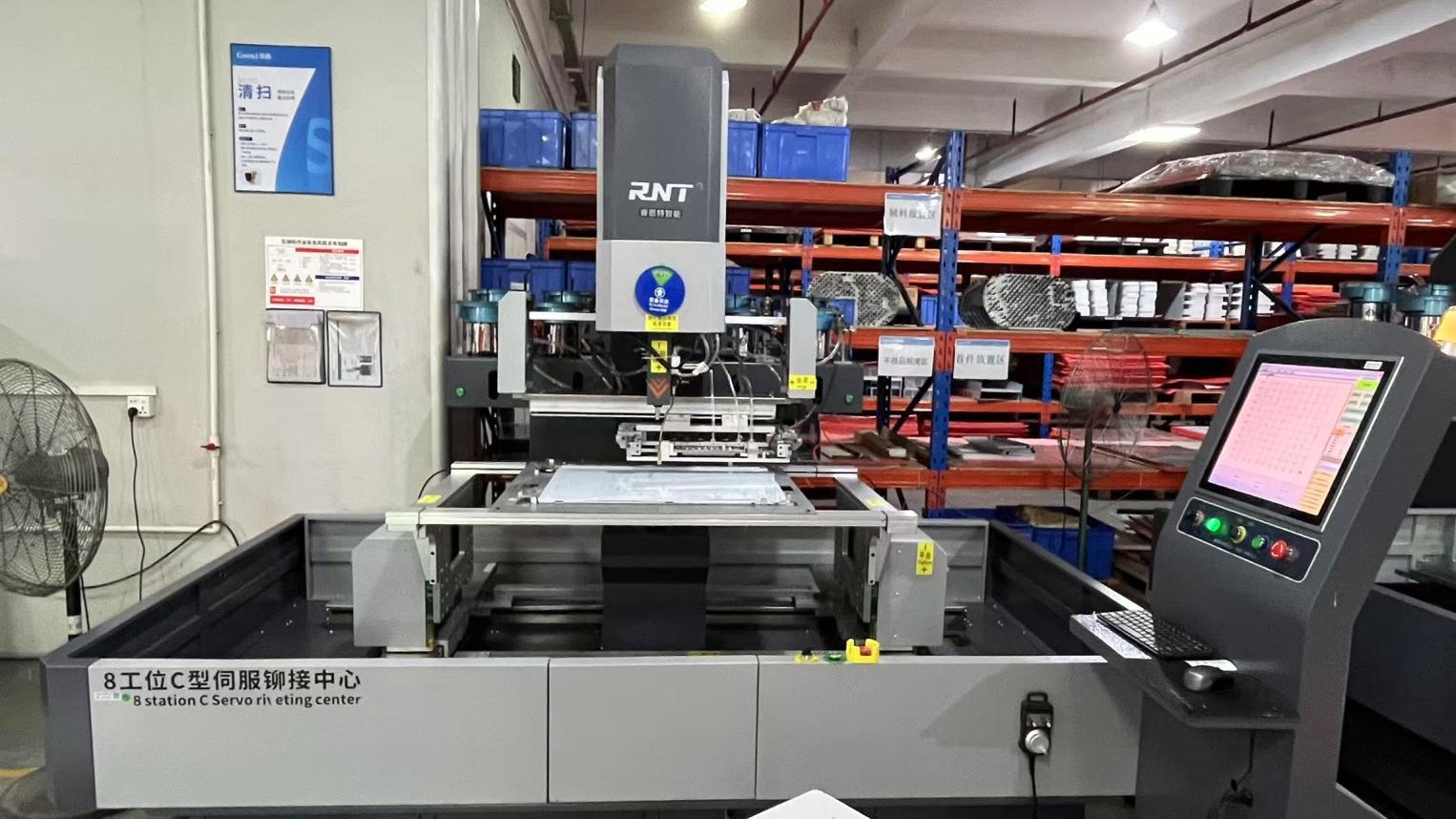


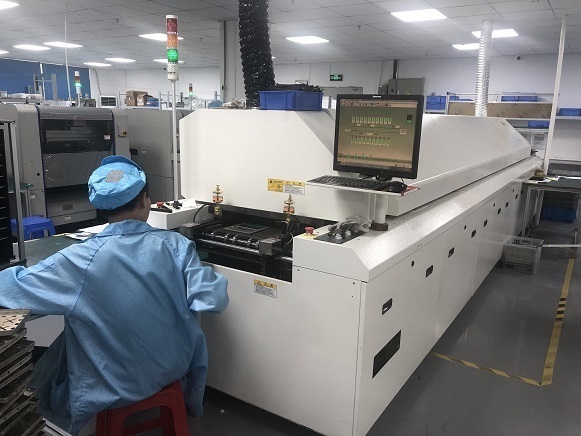

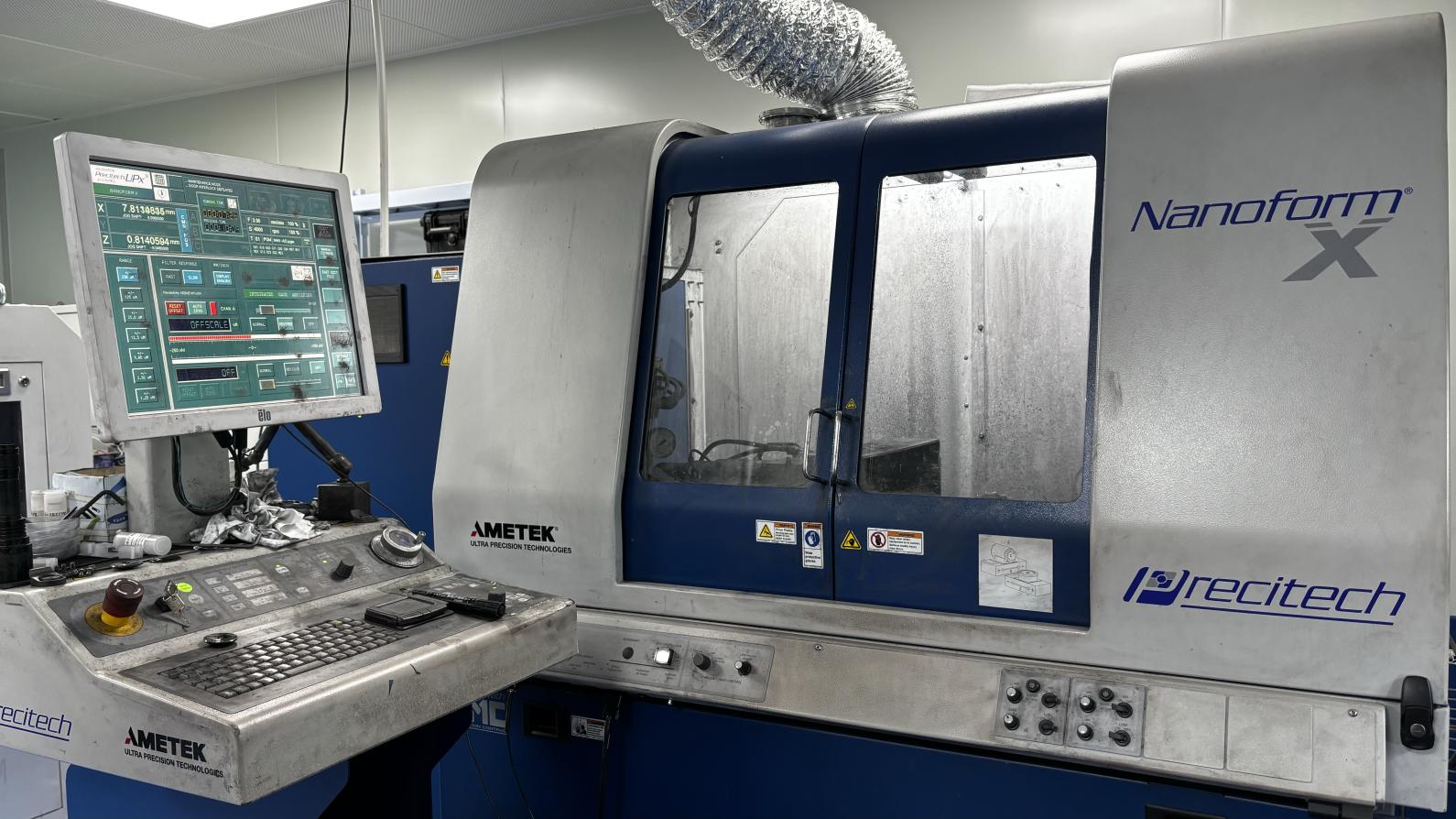
Whether you need low-latency components for NYC micro-servers or high-density telecom panels upstate, our engineering team can design, customize, and supply exact-fit passive RJ45 connectors to meet your technical tolerances.
 Transolix