CE Certified SFP Fiber Optic Transceiver Suppliers & Exporters

High-Speed Optical Connectivity Solutions for Global Enterprise Networks, Data Centers, and Telecommunications Infrastructure.

Demystifying CE Certified SFP Transceivers: An Industry Whitepaper

Understanding European compliance, signal integrity, and the critical parameters governing modern optoelectronics.

Why CE Certification Matters

CE marking is not merely a label; it is a legal requirement for distributing active optoelectronic hardware within the European Economic Area (EEA). For SFP (Small Form-factor Pluggable) optical transceivers, CE certification indicates strict adherence to key directives:

  • EMC Directive (2014/30/EU): Ensures the transceiver does not generate electromagnetic interference that compromises neighboring components (such as adjacent SFP cages or host PCB traces) and remains immune to external EMI.
  • Low Voltage Directive (LVD - 2014/35/EU): Verifies electrical safety, mitigating risks of short circuits or excessive thermal output, which is critical in high-density data center racks.
  • RoHS Directive (2011/65/EU): Restricts hazardous substances, assuring global buyers that the transceivers comply with environmental safety regulations.

Transceiver Signal Integrity

High-speed optical networks operating at 10G, 25G, or 32G Fibre Channel require immaculate signal integrity. Key performance indicators verified by our automated testing protocols include:

  • Eye Diagram Mask Alignment: A clear, open eye diagram demonstrates low jitter and optimal rise/fall times.
  • Bit Error Rate (BER): Maintaining a BER better than 10^-12 to prevent packet drops and maintain transmission speeds over extended distances.
  • Digital Optical Monitoring (DOM/DDM): Real-time parameters monitor transceiver temperature, laser bias current, optical output power, and receiver optical power.

Strategic Manufacturing Advantages of China-Based Optical Transceiver Factories

Why the world’s leading telecom integrators source their optical interconnect solutions from our advanced facilities in China.

Complete Ecosystem Integration

Our facility is situated at the heart of the global electronics and optical communication supply chain. With access to 860 certified upstream suppliers of semiconductor wafers, laser diodes (TOSA/ROSA), and specialized packaging materials, we minimize lead times and shield clients from macro-economic supply chain bottlenecks.

Scalable R&D Ingenuity

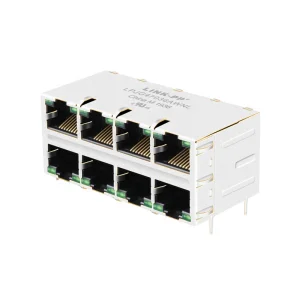
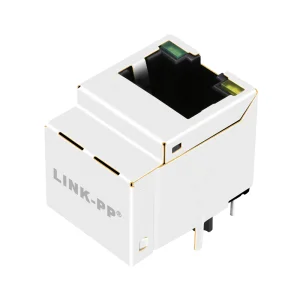
Equipped with a highly skilled R&D department consisting of 128 engineers, we continuously innovate. We released 86 new product designs last year alone, spanning high-speed SFP28 modules, advanced ganged SFP+ cages, and high-performance magnetic RJ45 connectors.

Rigorous Automated QA

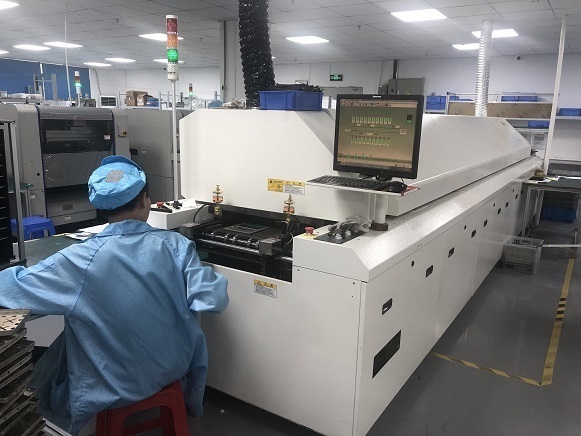
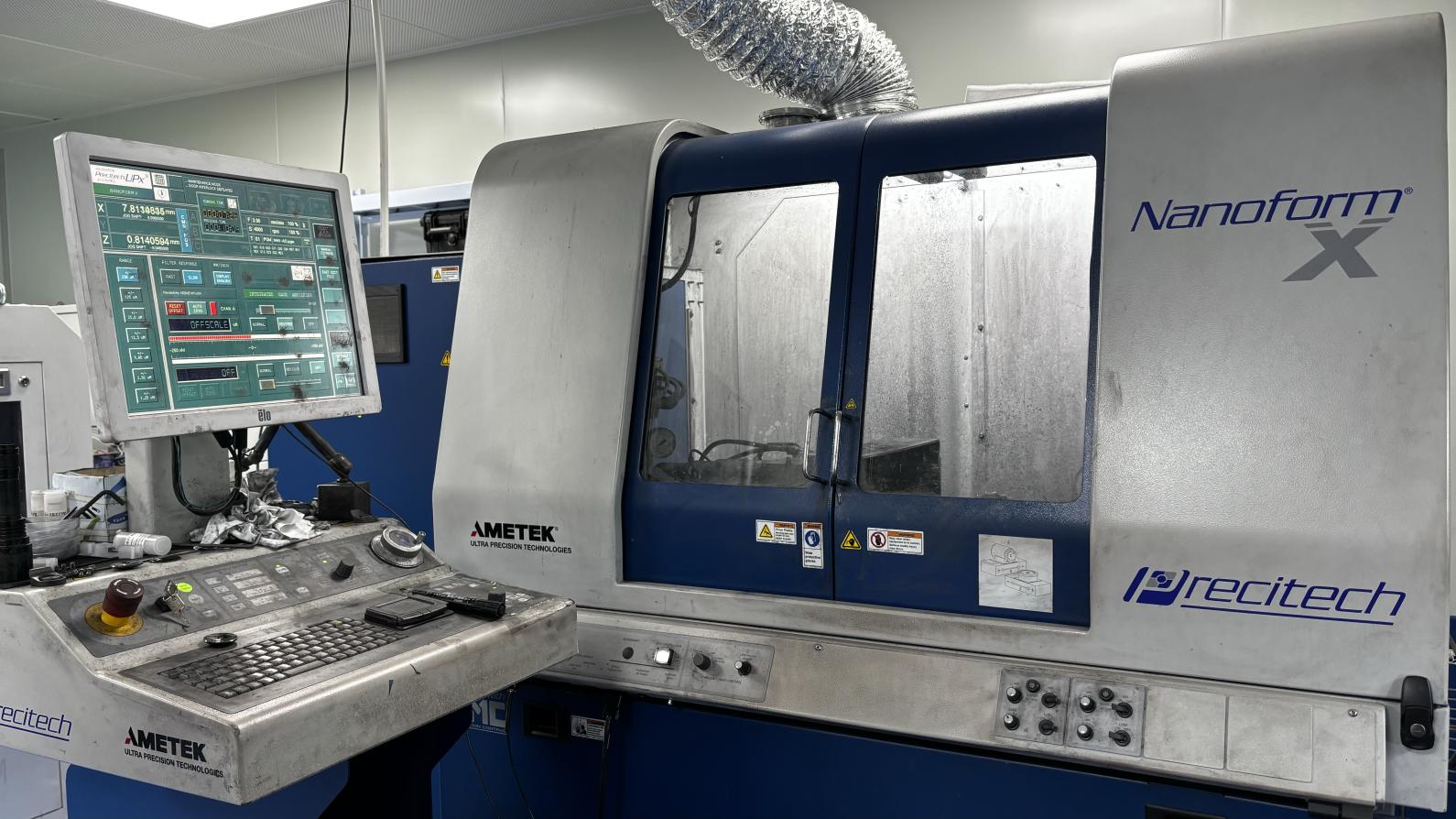
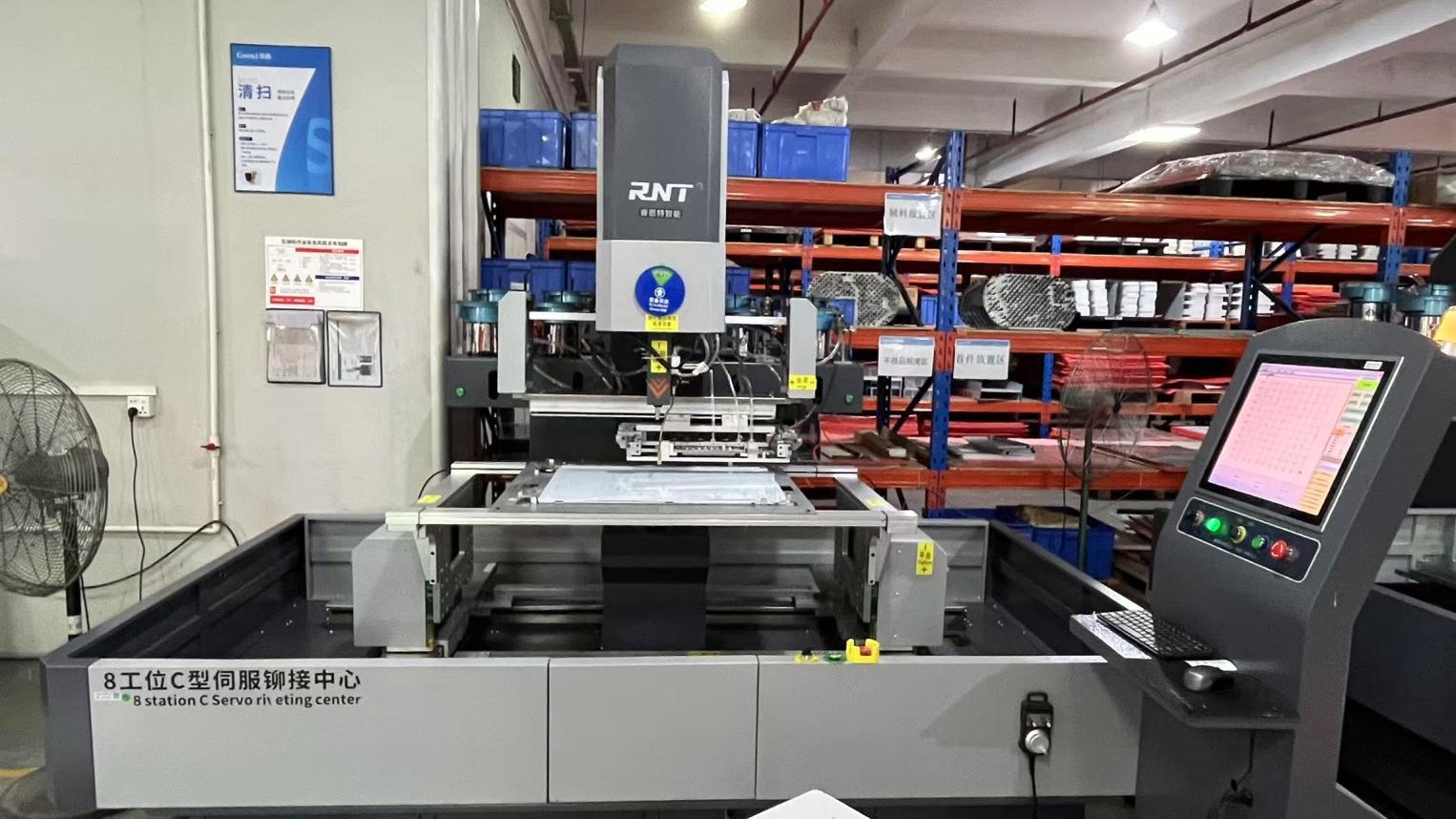
Cost efficiency in Chinese manufacturing is no longer just about labor arbitrage—it is driven by automation. Our automated optical testing, eye diagram analysis, and thermal aging chambers are operated by a dedicated quality assurance staff of 42 professionals, ensuring ISO 9001 compliance and zero-defect shipments.

Macro-Industry Solutions & Application Scenarios

Supporting critical infrastructure from carrier backbones to hyperscale enterprise data hubs.

1. Hyperscale & Cloud Data Centers

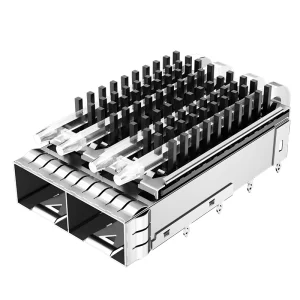
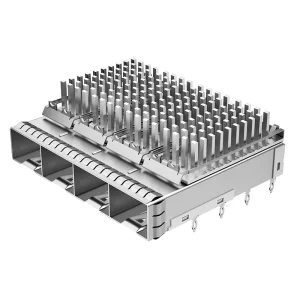
Modern virtualized cloud computing environments require high-density, low-latency interconnects. Our SFP+ and SFP28 transceiver modules, combined with press-fit SFP cages featuring advanced heat sinks, ensure efficient heat dissipation and thermal stability in dense 1U switch environments. This reduces cooling costs and enhances overall system reliability.

2. 5G Fronthaul & Carrier Telecom Networks

Base stations require industrial-grade transceivers that operate reliably under harsh outdoor conditions (-40°C to 85°C). Our single-mode and multi-mode transceivers offer wide-temperature operation, ensuring uninterrupted signal transmission from remote radio units (RRU) to baseband units (BBU).

3. Industrial Ethernet & Smart Grid Solutions

Industrial automation demands ruggedized hardware. By combining CE-certified SFP modules with magnetic RJ45 connectors, we deliver superior electromagnetic immunity (EMI) for factory floors, smart grid substations, and transport control systems where electrical noise is prevalent.

4. High-Performance Computing (HPC) & Storage

Storage Area Networks (SANs) utilizing high-speed Fibre Channel protocols depend on consistent throughput. Our 32G Fibre Channel transceivers provide the raw bandwidth and low latency required for real-time backup, databases, and high-frequency financial trading systems.

Meeting the Sourcing Matrix of Global Enterprise Buyers

Global procurement teams prioritize vendors that offer more than just low unit costs. When scaling enterprise networks, buyers evaluate technical compliance, supply security, and design support. Transolix addresses these concerns through:

  • Broad Switch Compatibility: Transceivers are EEPROM-coded to ensure compatibility with over 100 brands of switch, router, and NIC hardware (e.g., Cisco, Juniper, Arista, Dell, HP).
  • Long-Term Supply Contracts: We secure raw material reserves through strategic agreements, stabilizing prices and lead times during market volatility.
  • Comprehensive Customization: We offer custom firmware configurations, tailored cable lengths, and specialized bracket profiles to match unique system architectures.
11+
Years Industry Experience
USD 8-15M
Annual Export Revenue
128
R&D Engineers
860+
Upstream Suppliers

Transolix Corporate Profile

A premier optical transceiver manufacturer specializing in high-performance fiber optic communication solutions.

Founded in 2016, Transolix delivers reliable, high-speed, and cost-effective optical connectivity products worldwide. We serve global data centers, telecom operators, and enterprise networks with precision-engineered active and passive components.

Our commitment to continuous innovation is backed by a robust manufacturing infrastructure. While our specialized headquarters and high-precision testing facility span a dedicated 320㎡ area, our production is supported by an extensive ecosystem of 860 certified upstream suppliers. This hybrid model allows us to maintain strict quality standards while scaling output to meet high-volume demands.

Quality & Inspection Systems

Our QC protocols follow ISO 9001 and strict internal reliability standards. Every module undergoes automated optical testing, eye diagram analysis, thermal stress tests, and 100% final performance verification on target network switches prior to export.

We serve customers across North America, Europe, Southeast Asia, and the Middle East, offering custom options for wavelength, form factor, distance, protocol compatibility, and firmware coding.

Technical Q&A: Understanding SFP Specifications & Implementation

Common questions from network architects and procurement specialists.

What is the primary difference between SFP, SFP+, and SFP28 modules?
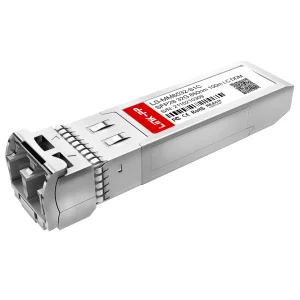
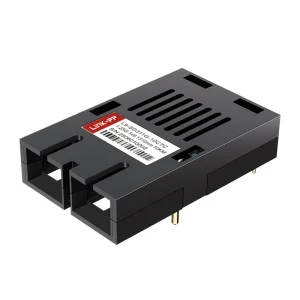
The difference lies in their maximum supported data rate, which is governed by the underlying electrical interface standards. Standard SFP modules typically support speeds up to 1.25 Gbps or 2.5 Gbps (common in Gigabit Ethernet and early Fibre Channel). SFP+ modules are engineered for 10 Gbps and 16 Gbps applications, utilizing improved signal integrity layouts. SFP28 is designed for 25 Gbps and 32 Gbps Fibre Channel applications, featuring enhanced clock and data recovery (CDR) chips to handle higher frequencies.
How does Transolix ensure compatibility with major switch brands?
Every network equipment manufacturer programs their host switches to look for specific vendor codes in the transceiver's EEPROM (Multi-Source Agreement memory map). Transolix utilizes advanced hardware programmers to code each transceiver with target vendor signatures. We maintain a compatibility testing lab equipped with switches from Cisco, Arista, Juniper, Dell, and others to verify that the modules are recognized and do not trigger "unsupported transceiver" warnings.
What are the benefits of choosing Single-Mode Fiber (SMF) over Multi-Mode Fiber (MMF)?
Single-Mode Fiber (SMF), typically using 1310nm or 1550nm wavelengths, features a narrow core (around 9 microns) that allows only a single light path. This minimizes modal dispersion, making SMF suitable for long-distance transmissions ranging from 10km up to 80km or more. Multi-Mode Fiber (MMF), usually using 850nm lasers, has a wider core (50 or 62.5 microns). While MMF transceivers and cables are more cost-effective for short distances (typically under 100m to 300m), modal dispersion limits their use over longer spans.
Why is the thermal design of SFP cages and heat sinks critical?
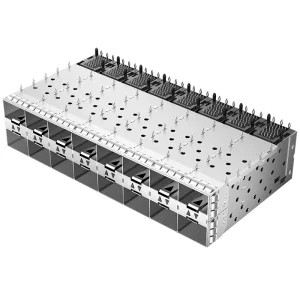
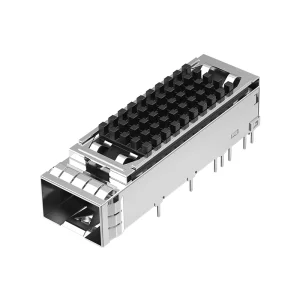
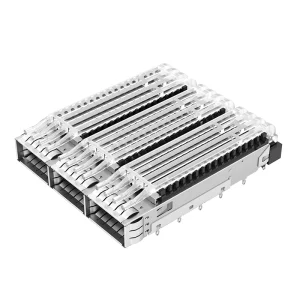
Optical transceivers convert electrical signals into optical ones, which generates heat. In high-density switch configurations, heat can build up and shorten the lifespan of the laser diodes. Using press-fit SFP+ cages with integrated copper or aluminum heat sinks helps draw heat away from the optical module. This keeps the internal components within safe operating temperatures, preventing performance degradation and extending the module's lifespan.
What role do RJ45 modular jacks with integrated magnetics play in network hardware?
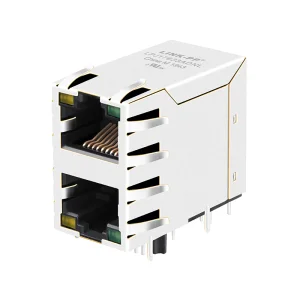
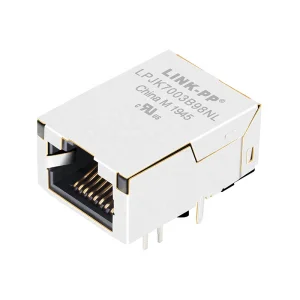
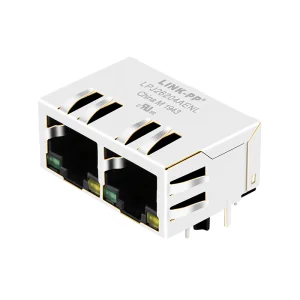
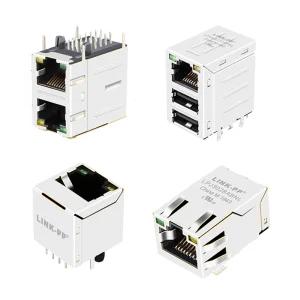
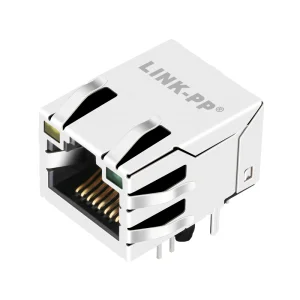
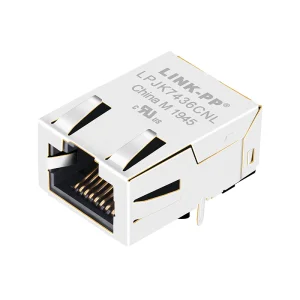
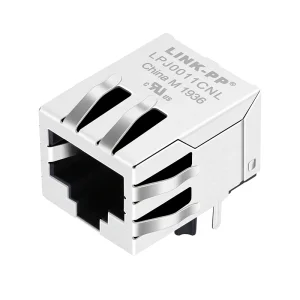
Integrated magnetic RJ45 connectors (often called MagJacks) combine the physical connector with electrical isolation transformers and common-mode chokes. This configuration protects host circuits from electrostatic discharge (ESD), reduces electromagnetic interference (EMI), and maintains signal integrity in copper Ethernet networks (10/100/1000 Base-T and 2.5G/5G/10G copper transmission).