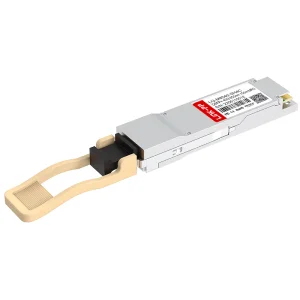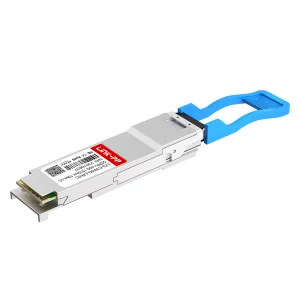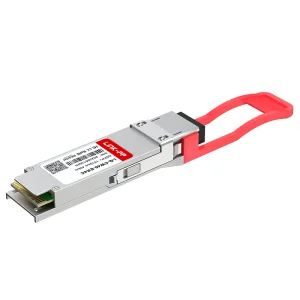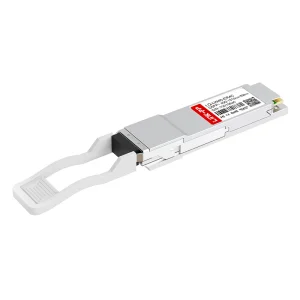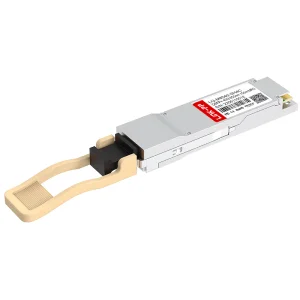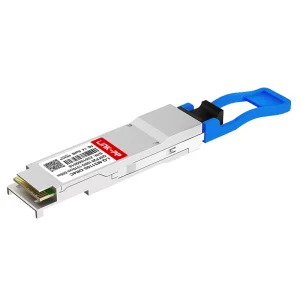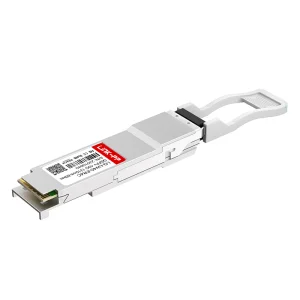
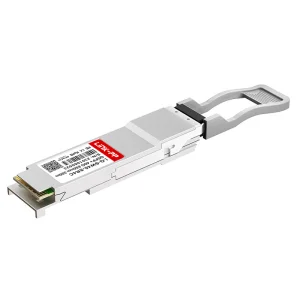
As the United States accelerates the deployment of artificial intelligence (AI) computing clusters, edge cloud solutions, and next-generation 5G RAN architectures, the demand for stable, ultra-reliable bandwidth remains at an all-time high. While 100G, 400G, and 800G form the backbones of hyperscale facilities like those owned by AWS, Google, and Meta, the 40G QSFP+ transceiver remains the absolute workhorse of enterprise access networks, campus backbones, and regional service providers.
Within the US, IT infrastructure lifecycle management requires a balance of bandwidth scaling and cost-efficiency. QSFP+ (Quad Small Form-factor Pluggable Plus) modules offer a reliable and mature technical platform that allows corporate network engineers to aggregate multiple 10G channels easily without overhaul of their legacy physical plant. This is particularly relevant in regional healthcare networks, municipal datacenters, and state educational institutions looking to optimize CAPEX while meeting modern data delivery metrics.
Transolix is a specialized optical transceiver manufacturer designing high-performance fiber optic communication solutions for global datacenters, telecom operators, and enterprise networks. With deep engineering capabilities and highly scalable validation and assembly systems, Transolix guarantees optical compatibility and physical durability across all major networking hardware ecosystems used in the United States, including Cisco, Arista, Juniper, Dell, and Extreme Networks.
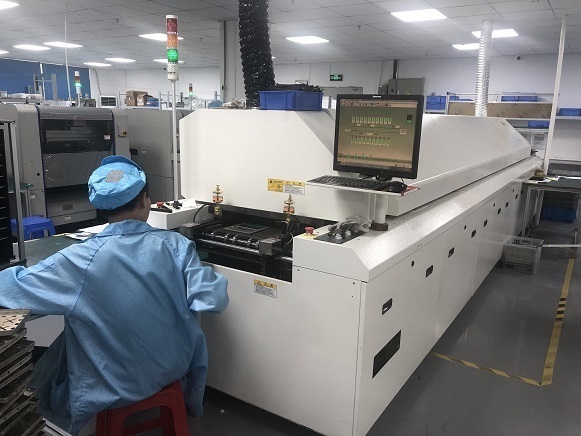
Our operational model prioritizes stability. By deploying state-of-the-art automated optical testing, eye diagram analysis, and thermal aging tests under full simulated payload conditions, we ensure that every module shipped to North American shores performs identically to OEM alternatives, at a fraction of the cost.
Understanding where 40G sits in the global networking hierarchy is vital for making sound procurement decisions. As global infrastructure transitions toward PAM4 (Pulse Amplitude Modulation 4-level) schemes for 100G/400G and coherent optics for 800G, the 40G standard (using NRZ modulation) represents a highly stabilized, low-power-consumption, and low-latency alternative that guarantees zero-packet-drop performance.
QSFP+ transceivers aggregate four independent 10Gbps optical channels, providing a total bandwidth of 40Gbps. This architecture allows for two distinct deployment topologies:
Our US clients require physical stability and compatibility that standard off-the-shelf imports cannot match. Transolix addresses this by:
| Module Type | Wavelength (nm) | Connector Type | Fiber Type | Max Reach | Typical Applications |
|---|---|---|---|---|---|
| 40GBASE-SR4 | 850nm | MPO-12 | MMF (OM3 / OM4) | 100m / 150m | ToR Switch-to-Switch Interconnects |
| 40GBASE-SR BiDi | 850nm / 900nm | Duplex LC | MMF (OM3 / OM4) | 100m / 150m / 300m | Cost-Effective Duplex Cabling Upgrades |
| 40GBASE-LR4 | 1270, 1290, 1310, 1330nm | Duplex LC | SMF (G.652) | 10km | Campus Backbone, Metro Ring Distribution |
| 40GBASE-ER4 | 1270, 1290, 1310, 1330nm | Duplex LC | SMF (G.652) | 40km | Inter-Facility Linking, Enterprise WANs |
| 40GBASE-ZR4 | 1270, 1290, 1310, 1330nm | Duplex LC | SMF (G.652) | 80km | Long-haul Telecom, Regional Service Providers |
No two network environments are alike. Transolix designs comprehensive optical solutions to address specific sectoral challenges across the North American continent.
Hospital systems require low latency and high bandwidth to route high-definition MRI scans, patient records, and real-time telehealth streams. Transolix 40G QSFP+ modules provide a secure, EMI-resistant layer that integrates with core switching fabrics, maintaining full compliance with federal data transmission speed requirements.
University campus grids require flexible networking pathways capable of handling thousands of wireless endpoints, research compute clusters, and cloud-connected learning management tools. By deploying 40G SR4 and LR4 solutions, campus IT groups easily upgrade core trunks without rewriting operational routing policies.
Modern factories across the Midwestern United States deploy private local area networks to coordinate automated assembly systems, machinery feedback loops, and local data collection. Transolix industrial-temperature rated modules ensure consistent performance in environments subject to vibration, thermal flux, and electromagnetic interference.
Colocation centers outside primary US tech hubs utilize our 40G QSFP+ modules to build multi-tenant distribution layers. This facilitates high-density distribution and flexible bandwidth provisioning for tenant racks while lowering absolute power overhead per gigabit of throughput.
Yes. Transolix specializes in OEM firmware customization. During production, we program the module's EEPROM with the exact vendor signature (such as Cisco, Arista, Juniper, Dell, or HP) required by your target hardware, ensuring seamless integration, immediate identification, and no diagnostic warning messages.
40GBASE-SR4 utilizes a parallel MPO/MTP-12 connector, sending and receiving data over 8 physical multimode fibers (4 lanes transmitting and 4 lanes receiving at 10Gbps each). 40G BiDi (Bidirectional) transceivers utilize two wavelengths (typically 850nm and 900nm) transmitted simultaneously over a single duplex LC fiber cable pair, allowing network operators to upgrade from 10G to 40G without replacing existing LC multimode cabling.
Our long-range modules (40km ER4 and 80km ZR4) undergo extreme testing conditions. We run them through automated optical testing, eye diagram analysis, and thermal stress chambers to simulate multi-year deployment lifecycles under extreme heat and continuous high-load states. This verification system prevents laser degradation and signal-to-noise ratio issues over long single-mode runs.
Yes, all Transolix 40G QSFP+ modules are fully compatible with SFF-8436 standards and support Digital Optical Monitoring (DOM/DDM). This permits network administrators to monitor real-time operating metrics including laser power, optical receiver power, temperature, and supply voltage directly from the switch's command-line interface (CLI).
Yes, this is a standard configuration for SR4 and PSM4 modules. By configuring the host switch port to split-mode (or breakout mode) and using an MPO-to-4x-LC breakout cable, a single physical 40G QSFP+ interface can link directly to four separate 10G SFP+ transceivers on neighboring switches or servers.
For standard models (such as 40G SR4, BiDi, and LR4), we maintain stock for rapid turnaround. Standard shipping times to the US range between 3 to 7 business days. Custom programmed or high-volume orders are generally fulfilled and shipped within 1 to 2 weeks, depending on component availability.
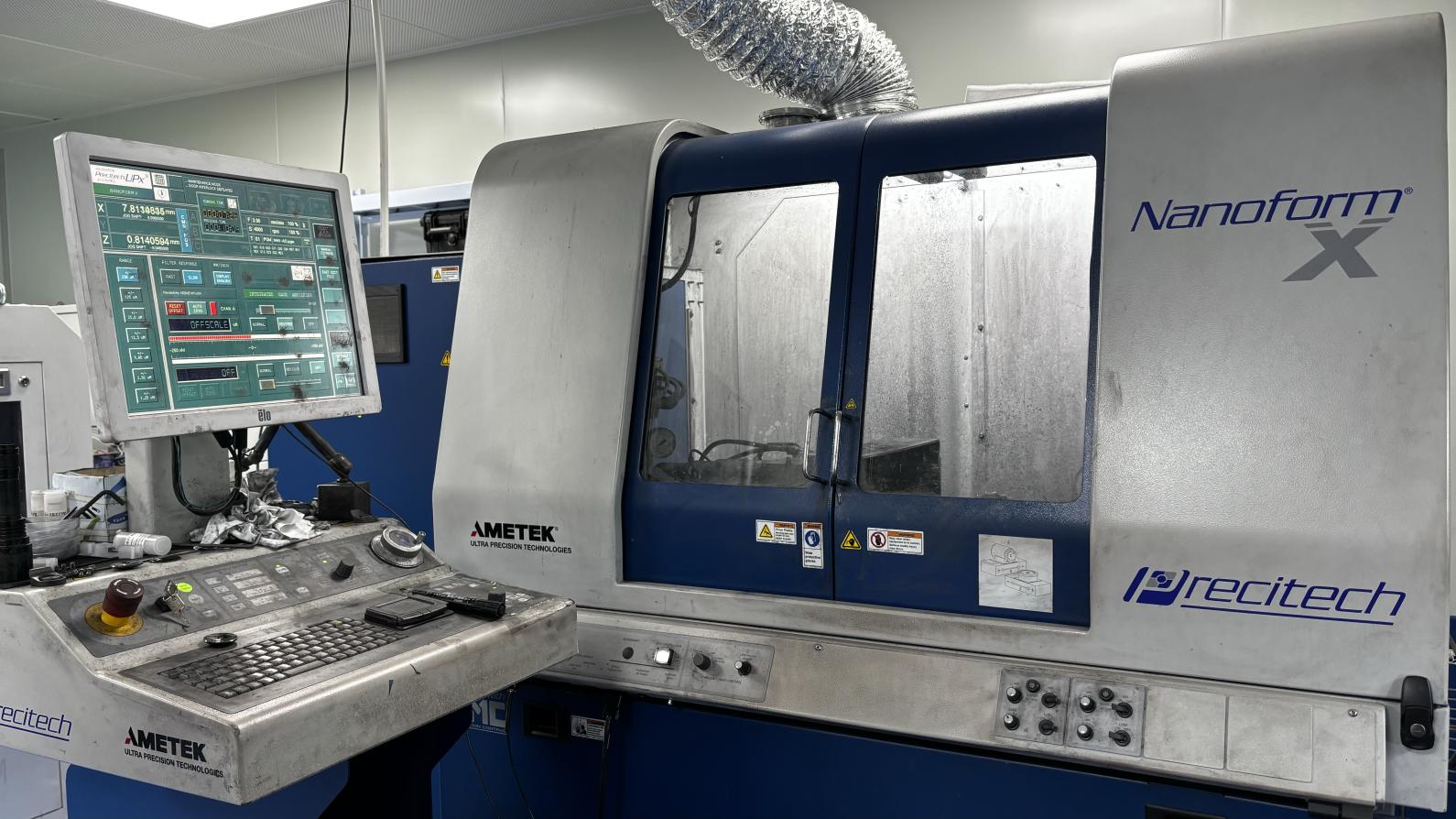
At Transolix, quality control is not a post-production check; it is integrated into our manufacturing process. We maintain an ISO 9001 certified environment. Every batch of 40G transceivers undergoes a stringent testing regime before packaging.
Using digital communication analyzers and high-precision error detectors, we verify target eye diagrams for symmetry, low jitter, and clean crossings. This translates to low Bit Error Rates (BER) and consistent reliability when plugged into mission-critical hardware environments in the United States.
Our Automated Test Equipment (ATE) checks the electric-to-optic and optic-to-electric conversion characteristics, laser bias currents, and voltage regulation tolerances of every module across varying thermal ranges.
We maintain deep relationships with 860 certified upstream suppliers. This extensive network ensures that we secure raw semiconductor substrates, high-performance lasers, and quality packaging parts even during periods of global supply chain disruptions.




Get in touch with our application engineering team today to discuss network compatibility, bulk pricing brackets, customized firmware encoding, or to request evaluate modules.
Send Inquiry Now Transolix