Transolix
Technical Roadmap & Future Outlook of Unshielded RJ45 Connectivity
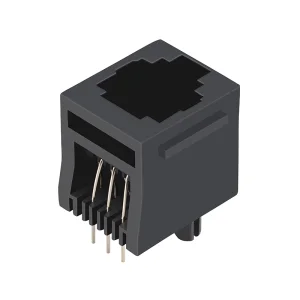
In high-performance LAN routing and active terminal links, the unshielded RJ45 (UTP - Unshielded Twisted Pair) structural standard remains a cornerstone of enterprise networks, telecom backbones, and IoT deployment. As global systems transition to higher bandwidth ceilings, the engineering of unshielded hardware must evolve to mitigate internal crosstalk, control impedance mismatches, and manage thermal dissipation profiles. Key advancements focus on optimizing mechanical design and materials science to deliver reliable electrical pathways without the added bulk, weight, and installation complexity of metallic shielding.
Historically utilized primarily in Cat5e and Cat6 channels, modern UTP configurations have extended into Cat6A, allowing 10Gbps throughput over 100-meter horizontal topologies. The design challenge centers on mitigating alien crosstalk (ANEXT), which becomes critical above 250 MHz. Advanced geometric configurations, physical layout separation of internal twisted-pair contacts, and precision plastic injection molding are utilized to control isolation margins. Looking ahead, manufacturing roadmaps prioritize composite engineering polymers and ultra-precise phosphor bronze contact structures featuring 50-microinch gold plating to exceed 750 mechanical insertion cycles while maintaining stable contact resistance profiles.
Modern applications require power delivery up to 90W/100W (IEEE 802.3bt Type 4). In high-density unshielded patch panels and modular jacks, this elevated electrical current causes temperature spikes. Thermal design engineering relies on premium engineering plastics (UL 94 V-0 flame-retardant LCP or PBT) and specific contact mating geometries to prevent destructive electrical arcing during under-load disconnections.
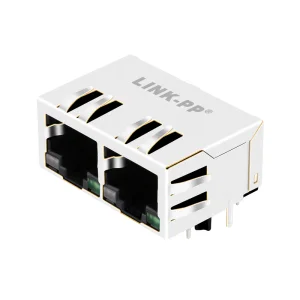
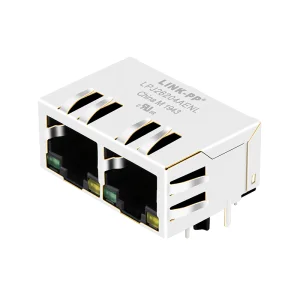
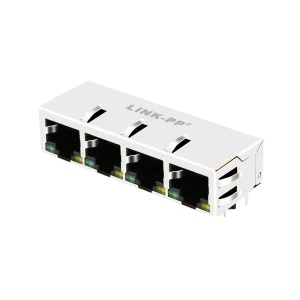
Furthermore, integration trends favor hybrid structural solutions where unshielded RJ45 housings are integrated directly with magnetic components (Integrated Connector Modules, or ICMs) and diagnostic LED systems. By building active low-pass filtering and common-mode chokes directly into the unshielded RJ45 footprint, component designers achieve high noise rejection at the physical layer, avoiding the need for heavy external shielding.