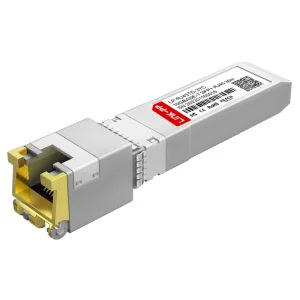
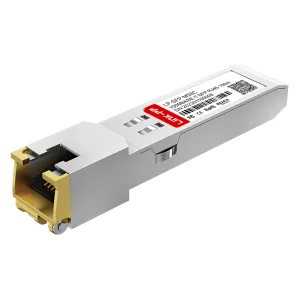
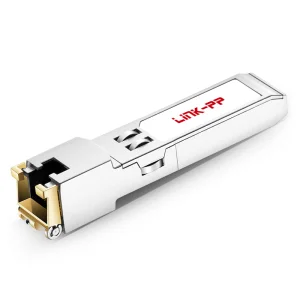
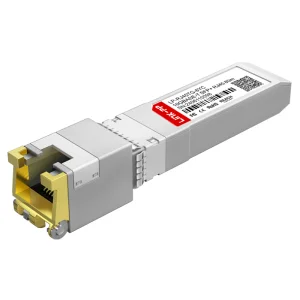
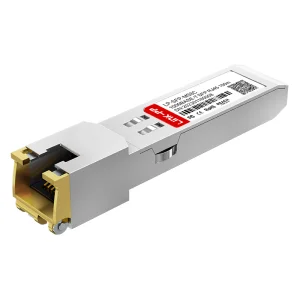
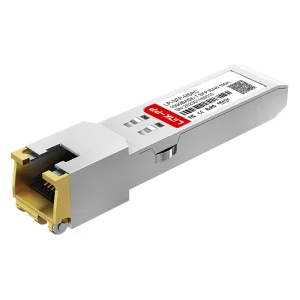
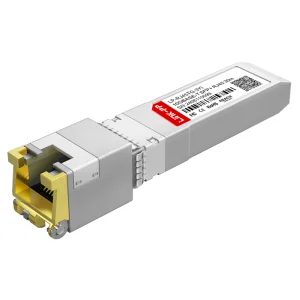
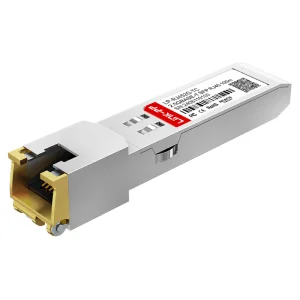
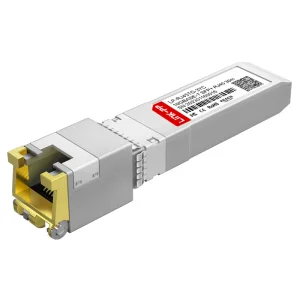
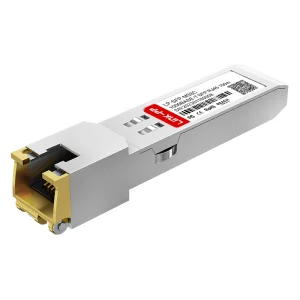
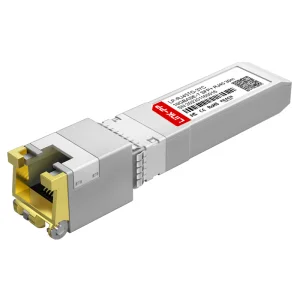
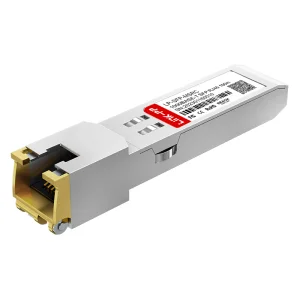
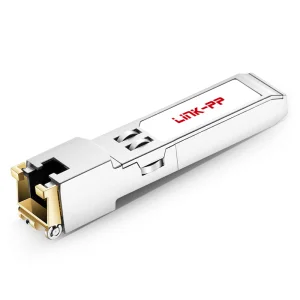
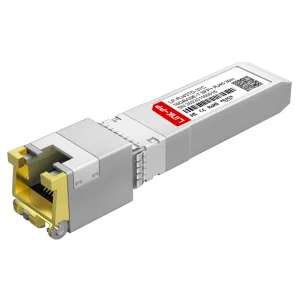
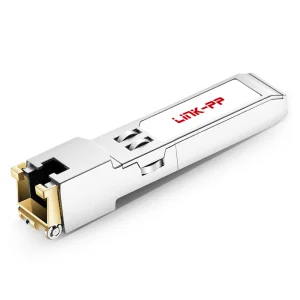
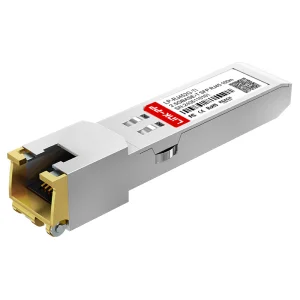
Optical Transceivers RJ45 Copper SFP Manufacturers & Exporter

High-Density Copper Connectivity & Enterprise-Grade Integration Solutions from Transolix — Over a decade of engineering excellence in fiber-to-copper hardware migration.

The Evolution of RJ45 Copper SFP Technology

Understanding how PHY architectures, power budgets, and category cabling standards drive performance in fiber-to-copper integration.

Bridging the Optical-to-Electrical Barrier

The Small Form-factor Pluggable (SFP) MSA defines a standardization format originally engineered for optical fiber transmission lines. However, the omnipresence of Category 5e, 6, and 6a copper cabling systems across worldwide enterprises prompted manufacturers to integrate physical-layer (PHY) translation logic directly inside the SFP module wrapper. Modern RJ45 Copper SFPs are not simple electrical passthroughs—they feature embedded SerDes (Serializer/Deserializer) to PHY microchips that translate line-rate optical patterns into Pulse Amplitude Modulation (PAM) signals capable of running across twisted pair copper lines.

From the early days of 1000BASE-T (Gigabit Ethernet) modules relying on simple SGMII interfaces, technologies have evolved. Today's architectures support multi-gigabit capabilities (2.5G, 5G, and 10GBASE-T) while maintaining downward compatibility, providing network administrators with a flexible tool to extend switch longevity without forcing structural rewiring.

Power Budget Design: Standard optical SFPs use less than 1.0W of power. Designing 10GBASE-T RJ45 SFP+ modules requires significant thermal management since early models consume up to 2.5W to drive signals over twisted pairs.
Signal Encoding Breakthroughs: Moving from 1G SFP (PAM5) to 10G SFP+ (PAM16 / DSQ128 constellation) allows packing more bits per hertz, reducing high-frequency attenuation over copper cables.
Integrated DSP (Digital Signal Processor): Compensates for cross-talk, echo, and return losses inside the copper line, ensuring reliable operations over standard 30m, 80m, or 100m links.

Technical Comparison: Copper SFP Standard Implementations

Standard Name Host Port Type Cabling Required Max Transmission Distance Typical PHY Latency Power Dissipation
1000BASE-T SFP (1.25 Gb/s) Cat5e / Cat6 Up to 100m < 100 ns ~ 1.0 W
2.5GBASE-T SFP (2.5 Gb/s) Cat5e / Cat6 Up to 100m < 250 ns ~ 1.5 W
10GBASE-T (Standard) SFP+ (10 Gb/s) Cat6a / Cat7 Up to 30m < 2.5 μs ~ 2.3 W - 2.5 W
10GBASE-T (Extended) SFP+ (10 Gb/s) Cat6a / Cat7 Up to 80m / 100m < 2.6 μs ~ 2.8 W - 3.0 W

Localized Application Scenarios of RJ45 Copper SFPs

From historical architectural challenges to multi-gigabit edge nodes, explore how these transceiver modules are applied across diverse environments.

1. High-Density Enterprise Data Centers

In Top-of-Rack (ToR) and End-of-Row (EoR) topologies, switches are often connected to server NICs with legacy RJ45 ports. Using copper SFP modules enables smooth transition paths without replacing expensive switches or structural fiber lines.

2. Edge Computing & Broadband Access Nodes

Edge locations need versatile copper drops to link 5G microcell towers, security cameras, and Wi-Fi 6/7 Access Points. Using copper SFP interfaces bridges fiber backhaul to localized copper distribution loops.

3. Harsh Industrial Automation Deployments

Standard commercial transceivers fail under extreme thermal shifts. Industrial-grade copper SFP modules support operating ranges from -40°C to 85°C, ensuring continuous performance in factory settings, SCADA setups, and transport systems.

4. Multi-Tenant Campus Lan Infrastructures

University campuses and business parks rely on fiber backbones but distribute signals via Cat6a cabling inside buildings. Copper SFPs convert optical inputs into standard RJ45 ports at the building switches, avoiding localized fiber runs.

Performance Insight: Utilizing 10GBASE-T Copper RJ-45 100m modules requires careful consideration of structural cable quality. When upgrading to 10G over existing networks, make sure you use Cat6a shielded twisted pair (STP) lines to avoid alien crosstalk (ANEXT) issues that can reduce link throughput.

Technology Roadmap: What Lies Beyond 10G over Copper?

For years, 10GBASE-T was considered the maximum speed limit for copper media, limited by physical signal dissipation, heat generation, and latency. However, next-generation standard roadmaps are expanding limits.

  • 25GBASE-T and 40GBASE-T Standards (IEEE 802.3bq): Using Category 8 cabling systems to transmit up to 25 Gbps or 40 Gbps over short distances of 30 meters. This standard enables low-latency inter-cabinet connections without moving to direct attach copper (DAC) cabling.
  • Optimized Energy Consumption (EEE - Energy Efficient Ethernet): Modern PHY processors feature dynamic sleep states. If there is no data flow, the transceiver reduces power output, keeping overall network operating costs down.
  • Adaptive Equalization Algorithms: New DSP architectures actively counter thermal drift and RF interference in real-time, helping links remain operational during sudden environment fluctuations.

Engineering Highlights

Our R&D roadmap focuses on resolving thermal issues in standard SFP+ slots. By optimizing the PHY silicon structure and improving package thermal conductivity, Transolix’s next-generation 10GBASE-T module operates reliably under 2.0W at full 30m reach, protecting switch slots from thermal degradation.

NEXT MILESTONE
Ultra-Low Power 10GBASE-T (1.6W, 30m Operating Range)

Transolix Corporate Architecture & Supply Chain Excellence

As an optical transceiver manufacturer and exporter, Transolix delivers reliable connectivity solutions to global markets.

2016
Established Year
320㎡
Specialized Lab & HQ
USD 8-15M
Annual Export Rev.
11 Years
Industry Experience
128
R&D Engineers

Robust Quality Systems & Inspection Methods

Quality is a core priority at Transolix. Every RJ45 Copper SFP module goes through our quality verification framework to guarantee compatibility and performance before shipment. We operate under ISO 9001 standards and strict internal reliability metrics.

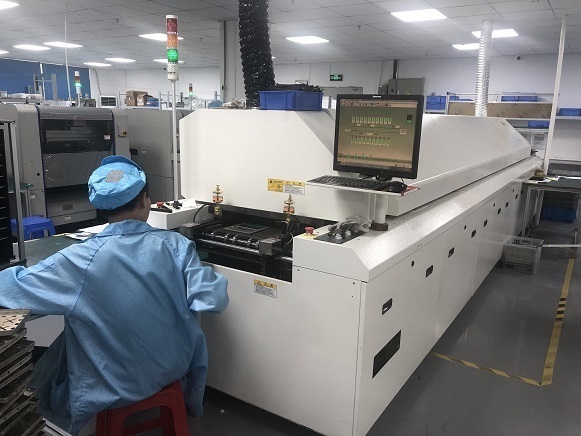
  • Comprehensive Physical Inspection: Automated Optical Inspection (AOI) to verify hardware structural integrity.
  • Performance Testing: Automated optical testing, eye diagram analysis, and real-time bit error rate (BER) checks.
  • Thermal and Reliability Testing: Environmental aging chambers running modules at full load under variable temperature cycles.
  • 100% Final Host Switch Verification: Active verification in Cisco, HPE Aruba, Ubiquiti, Juniper, and Generic switch platforms to ensure zero system compatibility issues.
  • Quality Control Staff: 42 dedicated quality assurance professionals auditing every production run.

Upstream Ecosystem & Customization Capabilities

Maintaining a resilient supply chain is critical to avoid project delays. Transolix has built a strong network of 860 certified upstream suppliers, securing key chipset and component availability even during global component shortages.

Supply Chain Advantage: Direct relationships with leading semiconductor providers ensure access to high-performance PHY chipsets.
Extensive Customization: We support custom wavelengths, form factors, custom transmission distances, dual-rate protocols, and custom EEPROM firmware codes.
Active R&D Pipeline: With 128 R&D engineers, we released 86 new product models last year alone to meet evolving industry standards.

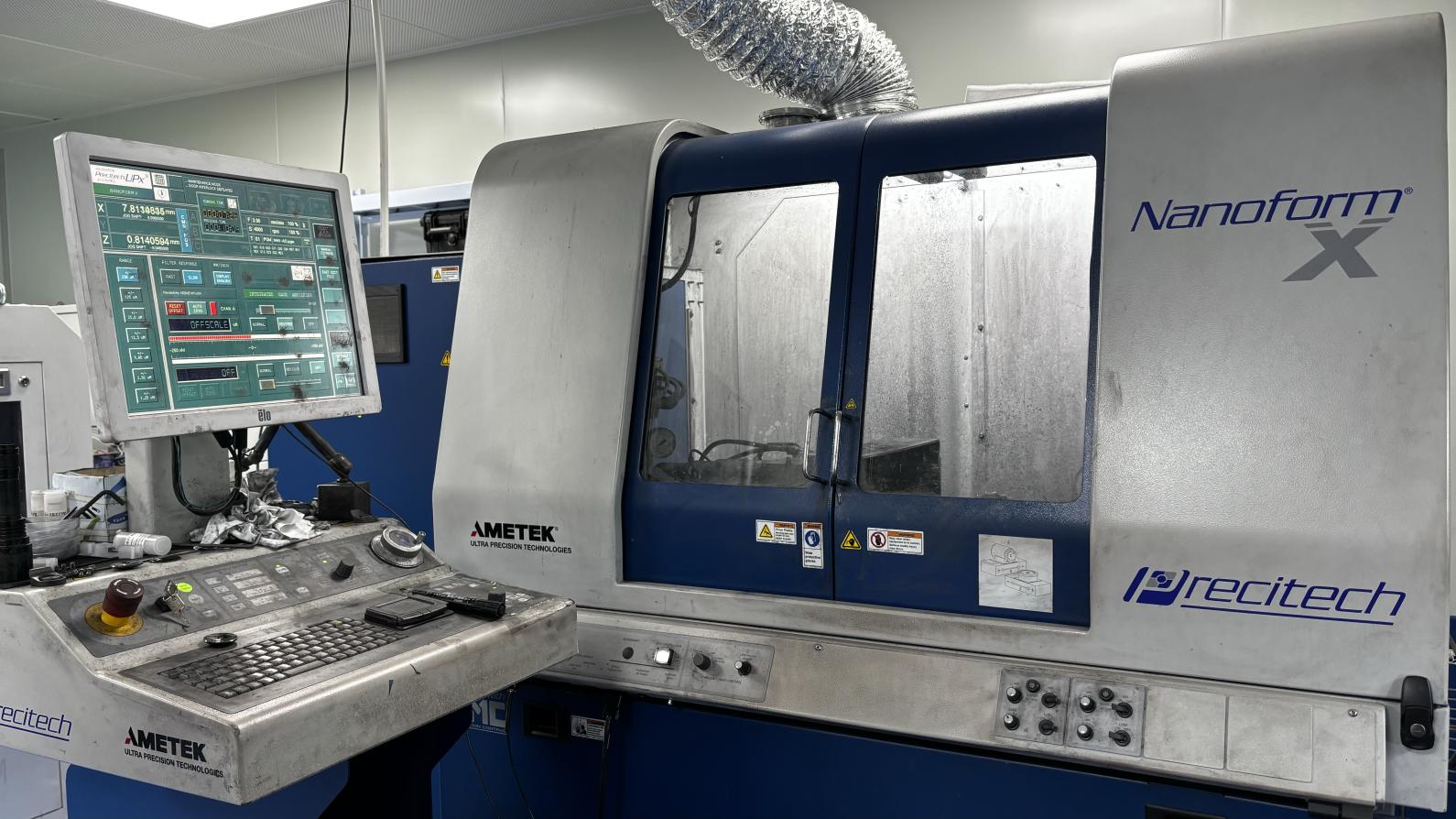
Production Quality Lab & Facilities

Visual insights from our high-precision assembly lines, optical testing laboratories, and shipping hubs.


Global Compliance, Standards, & Interoperability

Selling across major global regions like North America, Europe, Southeast Asia, and the Middle East requires adherence to regulatory frameworks. Transolix ensures all optical and copper transceivers satisfy structural, environmental, and interoperability mandates:

  • Multi-Source Agreement (MSA) Compliance: Built to specifications defined in SFF-8431 and SFF-8432 standards, ensuring physical and electrical fit across standard ports.
  • RoHS & REACH Compliance: Ensuring lead-free production processes and minimal environmental impact across the product lifecycle.
  • Electromagnetic Compatibility (EMC): Certified to FCC Part 15 Class B and CE EN 55022 limits, ensuring low electromagnetic emissions and protection against local interference.
  • Vendor Compatibility Coding: Our custom EEPROM coding capabilities ensure seamless integration with switches from Cisco, HPE Aruba, Ubiquiti, Juniper, and other major vendors.

Direct Value for Integrators

Because our modules are designed and programmed at the hardware level to match specific OEM switches, you can install Transolix RJ45 SFPs directly into active hosts without triggering "unsupported transceiver" warnings. This offers the same performance as original manufacturer modules at a lower cost.

Frequently Asked Questions

Critical engineering answers on thermal performance, range limits, and application of RJ45 Copper SFP transceivers.

Can standard 10GBASE-T RJ45 SFP+ modules operate up to 100 meters?
Most standard 10GBASE-T SFP+ modules are limited to 30 meters over Cat6a cabling due to the strict 2.5W power budget of standard switch slots. Extended range modules (such as our 80m and 100m models) utilize high-performance PHY chips to extend reach up to 100 meters, but require compatible switch ports that can handle the slightly higher thermal output.
What is the difference between SGMII and 1000BASE-T SFP modules?
1000BASE-T defines the physical standard for running Gigabit Ethernet over copper. SGMII (Serial Gigabit Media Independent Interface) is an internal interface protocol used to link the Ethernet MAC to the transceiver module's PHY chip. SGMII copper SFPs allow older systems and processors to interface directly with 10/100/1000BASE-T auto-negotiating networks.
Why do RJ45 copper SFP+ modules run hot compared to optical modules?
Optical transceivers convert light to electrical signals using low-power lasers. Copper transceivers require powerful DSPs to run high-speed signals over twisted pair copper lines while actively countering echo, crosstalk, and high-frequency attenuation. This processing requires more power (typically 2.0W - 2.5W), which is dissipated as heat through the module casing.
Are Transolix copper transceivers compatible with Cisco and HPE switches?
Yes. Every module can be programmed with vendor-specific configuration files during production. We support compatibility profiles for Cisco, HPE Aruba, Ubiquiti, Juniper, and other major network brands, ensuring the transceivers operate correctly with no host errors.
Can I mix copper SFPs and optical SFPs on the same switch?
Yes, you can mix transceiver types on the same switch. However, you should check your switch's manual for thermal density limits, as placing several high-draw 10GBASE-T RJ45 modules in adjacent slots can create localized hotspots.
All RJ45 Copper SFP Products