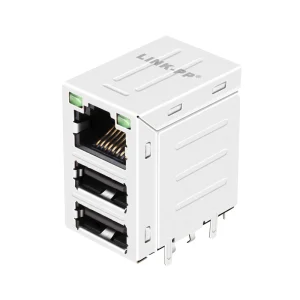
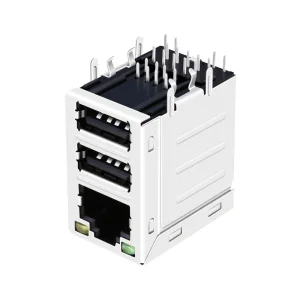
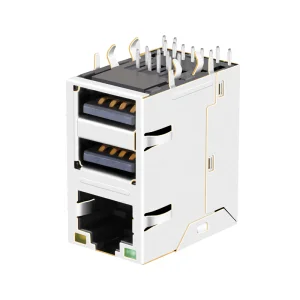
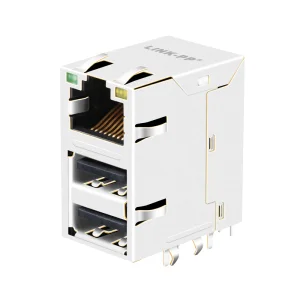
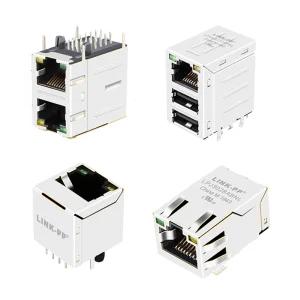
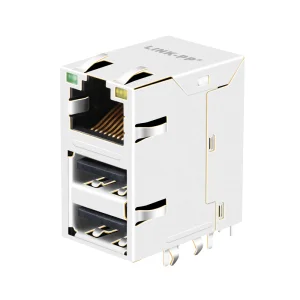
Explore our top-tier integrated magnetic RJ45 female connector products engineered with dual USB stacks for space-critical networking platforms.
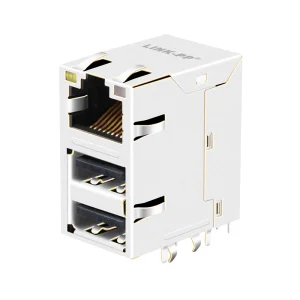
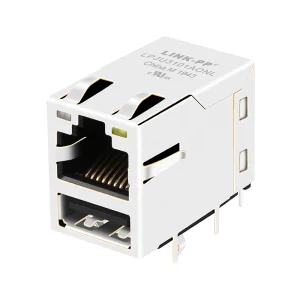
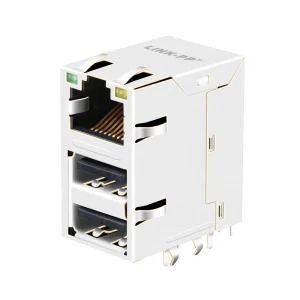
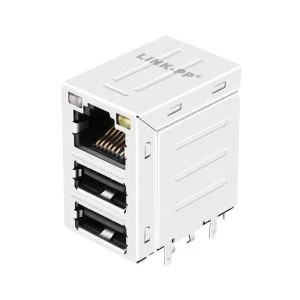
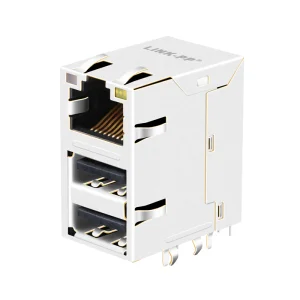
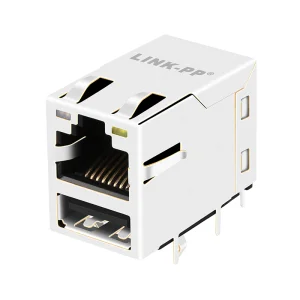
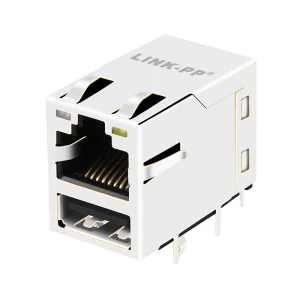
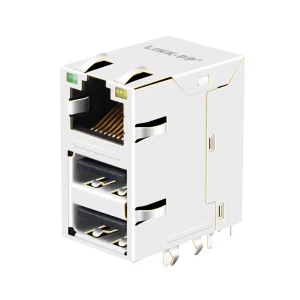
Understanding high-density board routing, signal integrity challenges, electromagnetic shielding, and thermal considerations in combined ethernet and USB interface architectures.
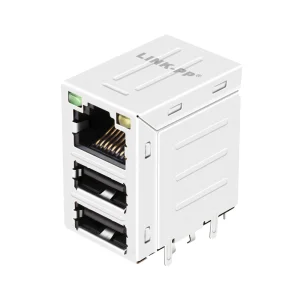
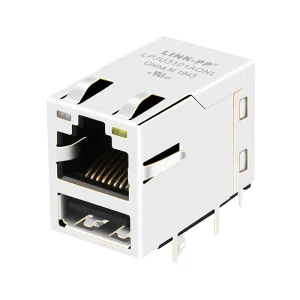
In modern telecommunications hardware, hardware engineers are consistently pressured to reduce PCB surface area while increasing peripheral capabilities. The integration of the RJ45 Female Connector with stacked USB (2.0 or 3.0) modules provides a dual-interface utility in a single socket footprint. By stacking the high-performance RJ45 network jack directly over or alongside USB ports, engineers can reduce mechanical opening counts on device chassis and optimize microstrip trace pathways on multilayer PCBs.
Combining Ethernet lines (running at frequencies up to 250 MHz for Category 6) and high-speed USB 3.0 lines (running at 5 Gbps SuperSpeed) within the same metallic shield presents high risks of capacitive and inductive crosstalk. Advanced combo connectors employ internal steel or brass partitions that isolate the Ethernet magnetics (common-mode chokes, isolation transformers) from the USB differential pairs. This design configuration maintains isolation values exceeding -40 dB across high-frequency bands.
External electromagnetic interference and electrostatic discharge (ESD) pose constant failure risks to data transmission. Professional integrated connectors feature specialized nickel-plated brass shells with multiple grounding tabs (EMI fingers) that contact the chassis panel. This forms a Faraday cage that channels high-frequency noise directly to the chassis ground, protecting sensitive internal components and guaranteeing compliance with global standards such as FCC Part 15 Class B and EN 55022.
Rather than placing discrete filter components on the motherboards, premium RJ45 Connector With USB packages contain integrated magnetic modules. These sub-assemblies combine impedance-matching transformers, common-mode chokes, and Bob Smith termination circuits. By containing the magnetic coupling within the connector shell, return loss is minimized (-12dB minimum at 100MHz), and high voltage isolation up to 1500V AC is reliably maintained between the physical cable and internal PHY chips.
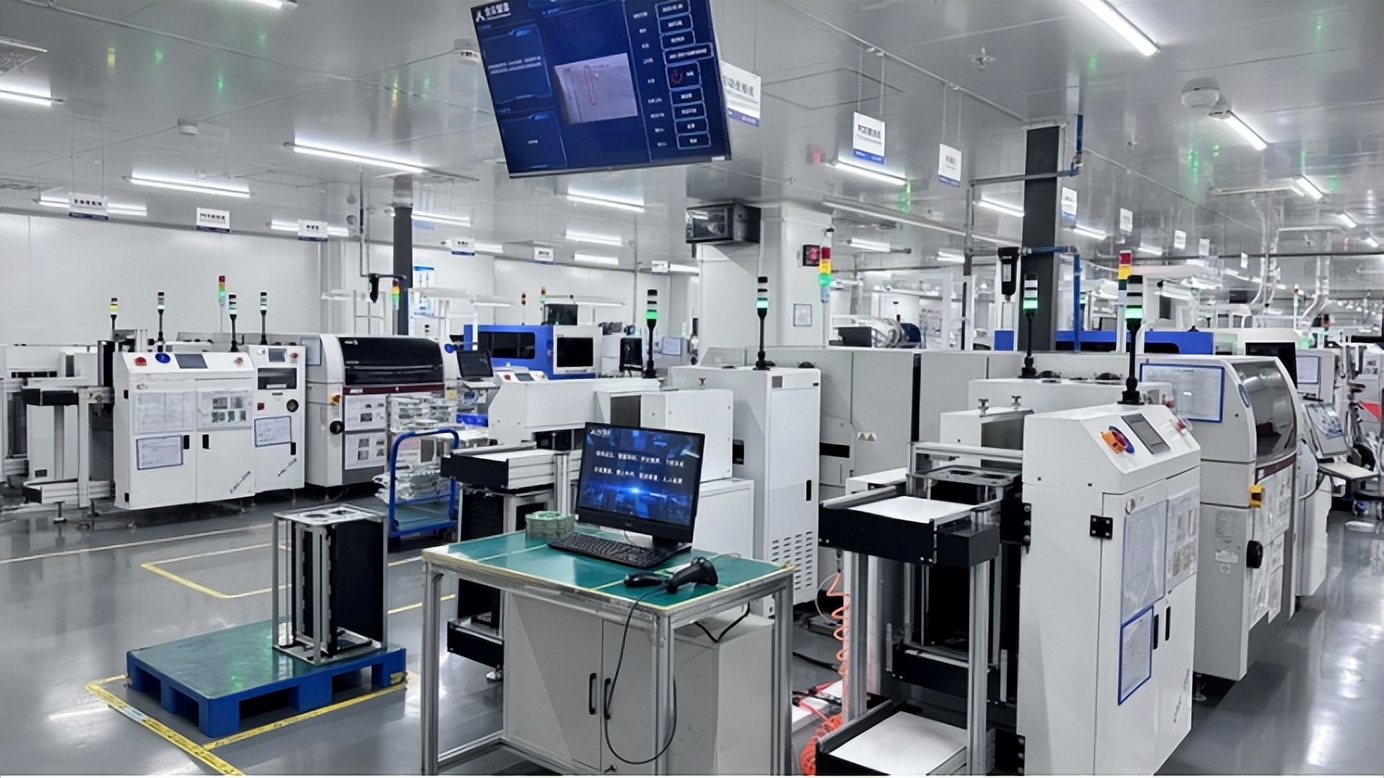
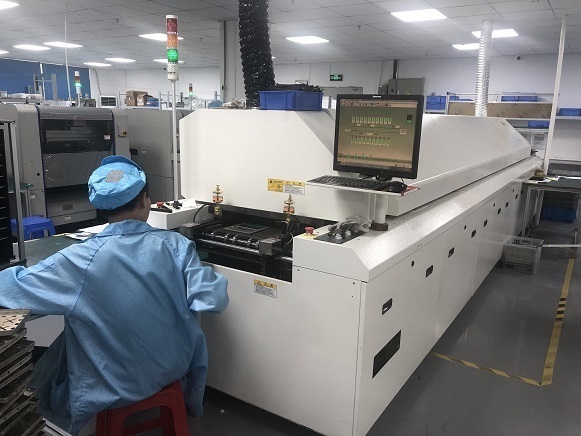
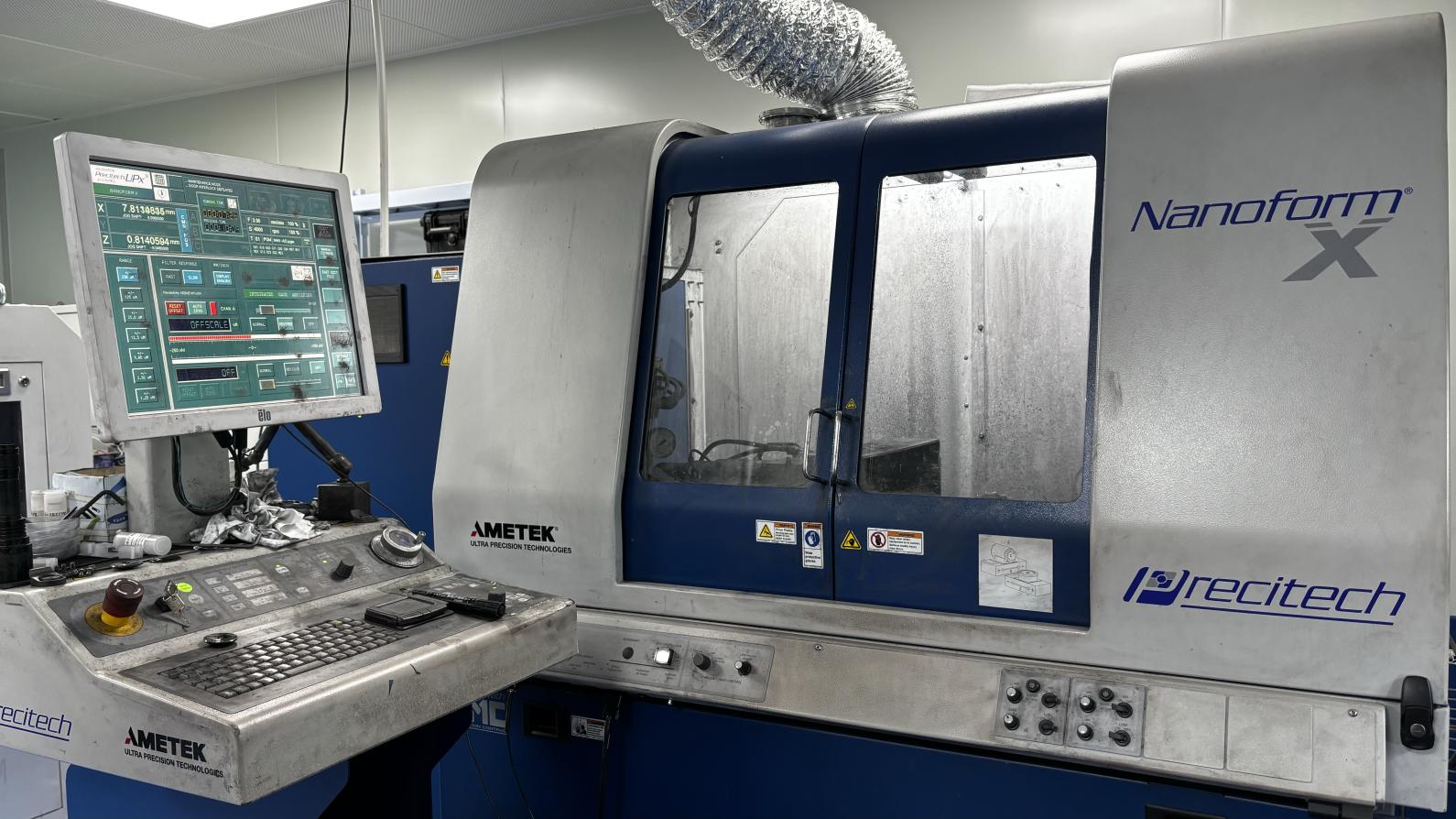
The global dominance of Chinese factories in manufacturing the *RJ45 Connector With USB* stems from deep vertical integration and continuous investment in high-speed, automated production systems.
Modern factories integrate automated optical inspection (AOI) directly into the assembly line to instantly inspect contact alignment, solderability, coplanarity, and magnetic winding uniformity.
Transolix is a professional connectivity and optical transceiver manufacturer specializing in high-performance data communication solutions for global networks.
Established to pioneer next-generation high-speed connectivity interfaces and optical solutions.
A team of industry veterans bringing decades of engineering knowledge and deep expertise.
Serving telecom operators, data center integrators, and OEM/ODM clients worldwide.
Transolix is committed to delivering reliable, high-speed, and cost-effective interconnect solutions. With a building area of 320㎡ (specialized advanced laboratory and product verification facility) and 6 years of export experience, our QA system operates with ISO 9001 and strict internal reliability standards.



Integrating stacked RJ45 female connectors with USB ports supports high-speed data delivery in diverse networking systems.
Maintains reliable network backplanes while allocating direct USB connections for system configuration, troubleshooting, and micro-firmware updating right on the local rack interface.
Connects industrial programmable logic controllers (PLCs) via Gigabit Ethernet, while using the integrated USB slots to power environmental diagnostic sensors or external data logging drives.
Integrates signal magnetics directly to reduce design complexity, supporting local service console interfaces through the integrated USB link alongside high-speed data backplanes.
For sourcing managers selecting RJ45 combo modules, evaluating technical specifications prevents deployment line failures.
Verify insulation resistance values (minimum 500MΩ) and dielectric withstanding voltage threshold limits (1500V AC rms for contact-to-shield). Ensure insertion loss does not exceed -1.0dB across operational frequency bandwidths.
Specify gold plating thickness based on wear requirements. 3u" is suitable for entry-level applications, while 30u" to 50u" gold contact coatings are recommended for telecom systems that require high mating cycles.
Expert responses addressing signal degradation, mechanical longevity, and system integration questions.
USB 3.0 lines operate at 5 Gbps, generating high-frequency noise that can impact Ethernet twisted pairs. To prevent performance drop-offs, combo connectors utilize integrated micro-shields. This design maintains isolation while shielding the RJ45 magnetics from the heat generated by adjacent USB power pins.
High-temperature engineering polymers such as PA9T and Liquid Crystal Polymer (LCP) are dimensionally stable up to 260°C. This allows the connector to withstand reflow soldering processes without warping, ensuring flat surface contact points on the PCB.
Yes, they can be designed to support IEEE 802.3af (PoE) and IEEE 802.3at (PoE+). This requires specifying internal transformer components with larger magnetic cores and heavier wire gauges (typically 30-32 AWG) to handle dc currents up to 600mA per pair without saturating the magnetic core.
Testing includes 100% hipoting (dielectric breakdown resistance), insertion/return loss sweeps via network analyzers, mechanical insertion force verification, eye diagram checks for USB ports, and environmental testing (salt spray exposure, thermal cycling) to verify the durability of the plating.
Review our extended product family of shielded RJ45 modules featuring single or dual USB stacks.
 Transolix