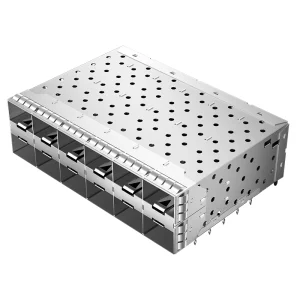
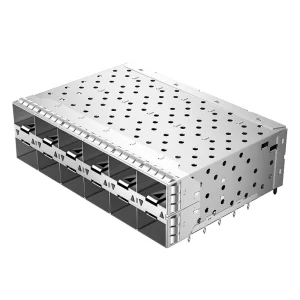
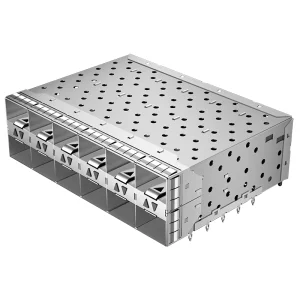
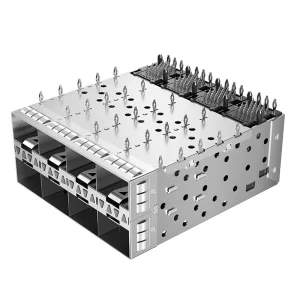
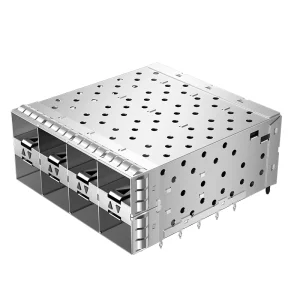
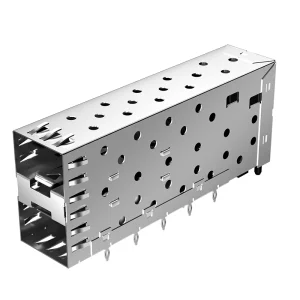
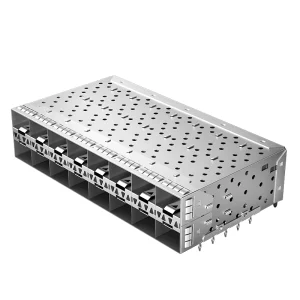
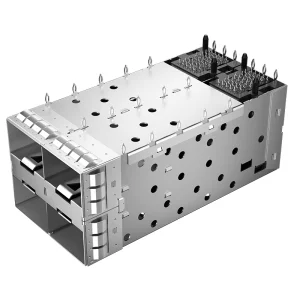
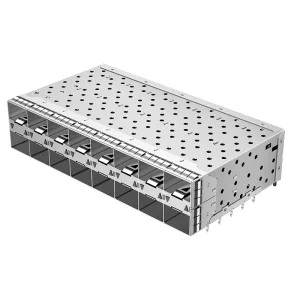
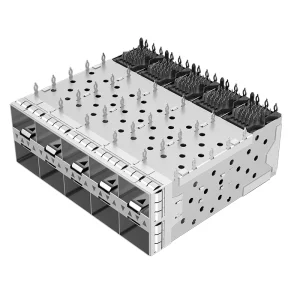
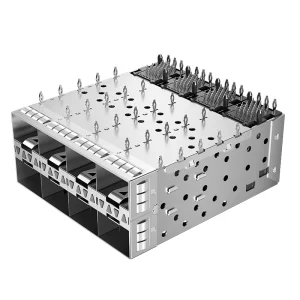
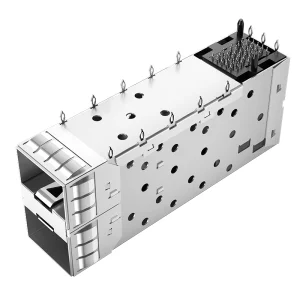
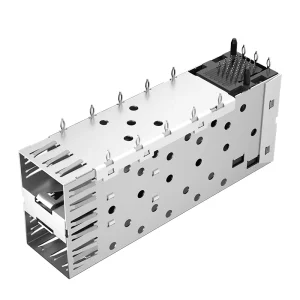
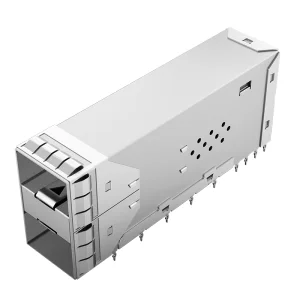
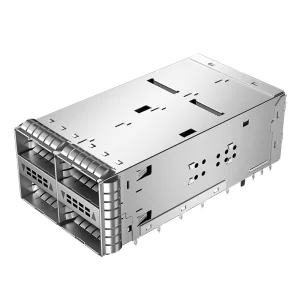
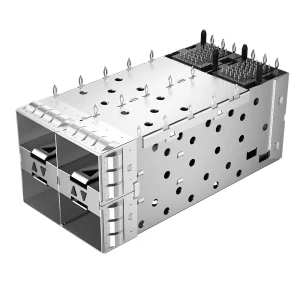
As optical network configurations transition rapidly from traditional gigabit ethernet to ultra-high-speed 25G, 50G, and 112G PAM4 signaling lanes, network hardware engineers face a twin challenge: maximizing port density while managing critical thermal dissipation and electromagnetic interference (EMI). The 2xN Stacked Port configuration represents the pinnacle of board-space optimization, effectively doubling physical I/O ports within standard 1RU form factors.
Transolix, a global engineering pioneer in optical connectivity components, designs, manufactures, and exports industry-standard compliant 2xN Stacked SFP, SFP+, and SFP28 cages. By combining advanced mechanical stamping with optimized multi-port light pipes and integrated high-performance connector housings, we offer global system integrators the modular reliability needed for modern switch, router, and server host boards.
Explore our top-tier catalog of 2xN stacked port configurations, offering pin-to-pin compatibility with TE Connectivity, Molex, and Pulse components. Engineered for press-fit PCB mounting, these modules feature integrated light guides and advanced EMI suppression springs.
The engineering topology of a 2xN SFP Cage (Stacked Port) is critical for signal integrity at data rates exceeding 10 Gbps and 25 Gbps per lane. Unlike single-row (1xN) configurations, stacked cages mount transceiver modules back-to-back in an upper and lower tier. This creates complex electrical trace-length matching requirements (skew management) and accentuates thermal boundary layers.
Advanced shielding options including stainless steel or copper-alloy shells with nickel/tin plating, integrated with elastomeric gaskets or metal EMI fingers, provide optimal grounding interfaces. This guarantees compliance with strict FCC Part 15 and CISPR 22 electromagnetic emissions standards.
Designed for high-speed automated board assembly, the compliant pin press-fit termination system eliminates solder bridge defects and reduces thermal stress on expensive multilayer PCBs. Our design achieves mechanical retention forces exceeding 44.5 N per port cage.
Custom-molded optical grade PMMA light guides direct visual status signals from surface-mount LEDs on the host PCB straight to the port bezel, isolating light transmission and preventing crosstalk between adjacent ports.
A baseline specification reference for hardware layout and mechanical integration planning:
| Parameter / Spec | SFP+ Stacked (10 Gbps Class) | SFP28 Stacked (25-28 Gbps Class) | zSFP+ Stacked (Ultra-High SI) |
|---|---|---|---|
| Pitch Spacing (Ports) | 14.25 mm standard spacing | 14.25 mm optimized matching | 14.25 mm tight tolerance |
| Base Metal Material | Copper Alloy / Stainless Steel | High-Performance Copper Alloy | Enhanced Thermal Brass/Copper |
| Contact Resistance | < 80 mΩ max variance | < 50 mΩ initial | < 35 mΩ high reliability |
| Insertion Force (Max) | 34.3 N per port | 34.3 N per port | 30.0 N refined slide path |
| Durability Cycles | 100 Min cycles | 250 Min cycles | 250+ cycles with low wear |
| EMI Containment | Top/Side ground fingers | 360° elastomeric gasket + fingers | Multi-point dynamic spring fingers |
The global deployment of cloud infrastructure, 5G wireless networks, and hyper-scale enterprise platforms is accelerating the migration from legacy 10G SFP+ components to 25G zSFP+ and SFP28/SFP56 architectures. The integration of artificial intelligence (AI) clusters requires unprecedented data throughput, demanding high-density switch configurations with 48 to 96 physical ports per 1RU chassis. This density is structurally unachievable without relying heavily on 2xN (Stacked Ports) layout designs.
Procurement managers and supply chain directors representing global OEMs and ODMs face strict quality directives when sourcing components. At Transolix, we address these technical requirements through rigorous standardization compliance:
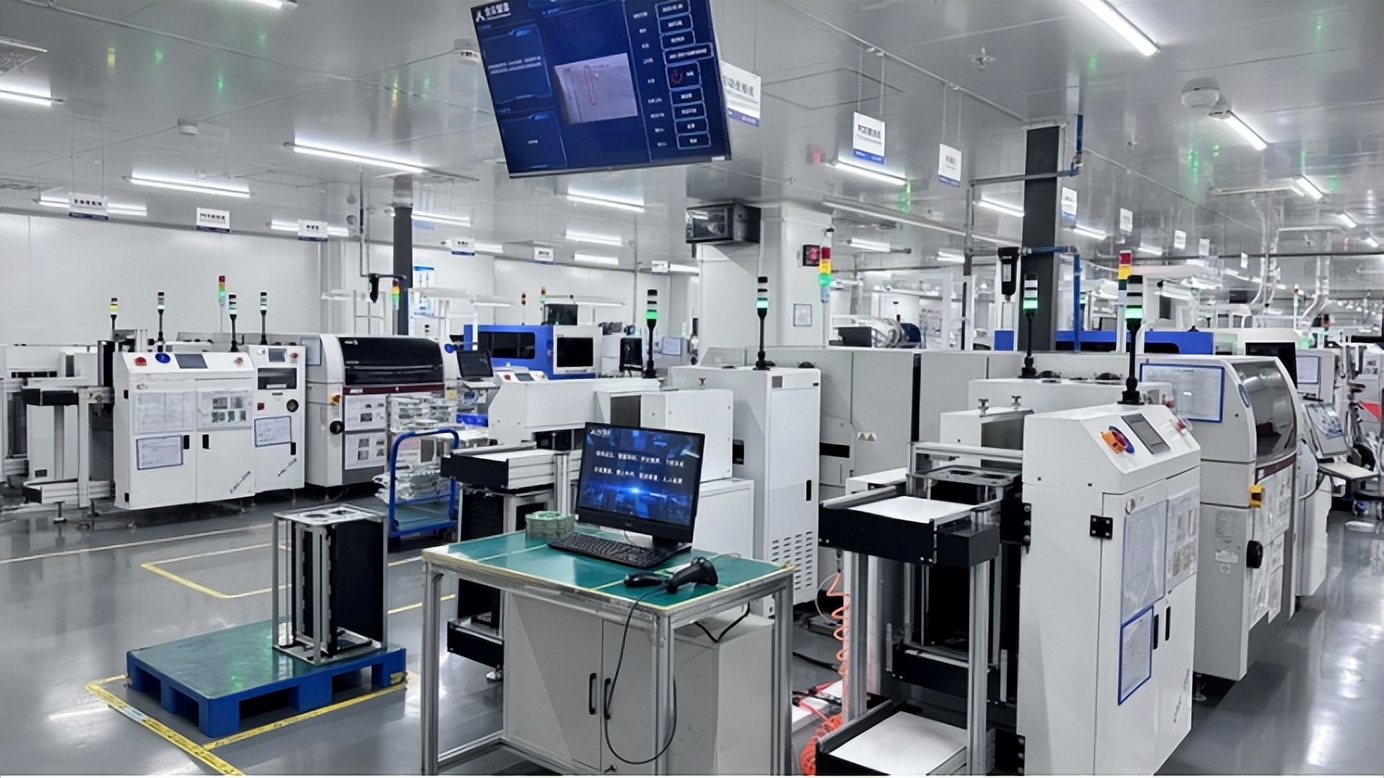
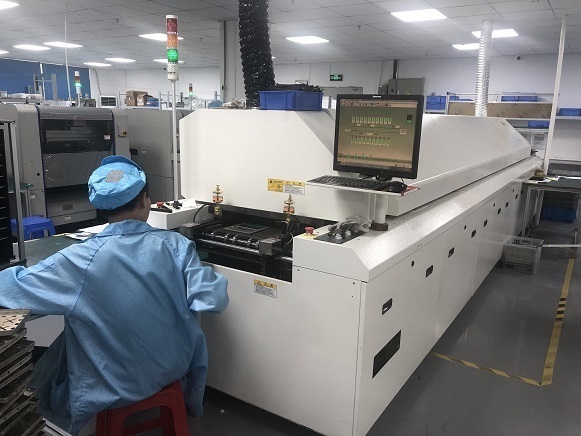
The global connectivity supply chain requires high reliability, rapid prototyping, and scalable manufacturing capabilities. Transolix leverages China’s Industry 4.0 manufacturing infrastructure, integrating high-speed progressive metal stamping dies, robotic insert molding systems, and automated post-insertion inspection stations.
By maintaining a structured network of 860 certified upstream vendors, we eliminate single-point-of-failure vulnerabilities in our raw material supply. Whether securing premium copper alloys, high-performance LCP (Liquid Crystal Polymer) plastic resins, or optical-grade PMMA for light pipes, our supply chain remains resilient. This structure ensures stable, multi-million-unit monthly capacity, shielding global customers from price volatility and lead-time delays.
Our ISO 9001 certified production lines run a 100% automated optical inspection (AOI) protocol alongside comprehensive laboratory testing. Each SFP Cage and integrated connector batch undergoes rigorous qualification procedures:
Cages are tested in severe salt-fog chambers for up to 48 hours to guarantee structural integrity and surface plating stability in high-humidity or coastal edge deployments.
Connector pins are evaluated for signal integrity at full high-speed bandwidth, proving optimal eye-opening characteristics and low jitter generation.
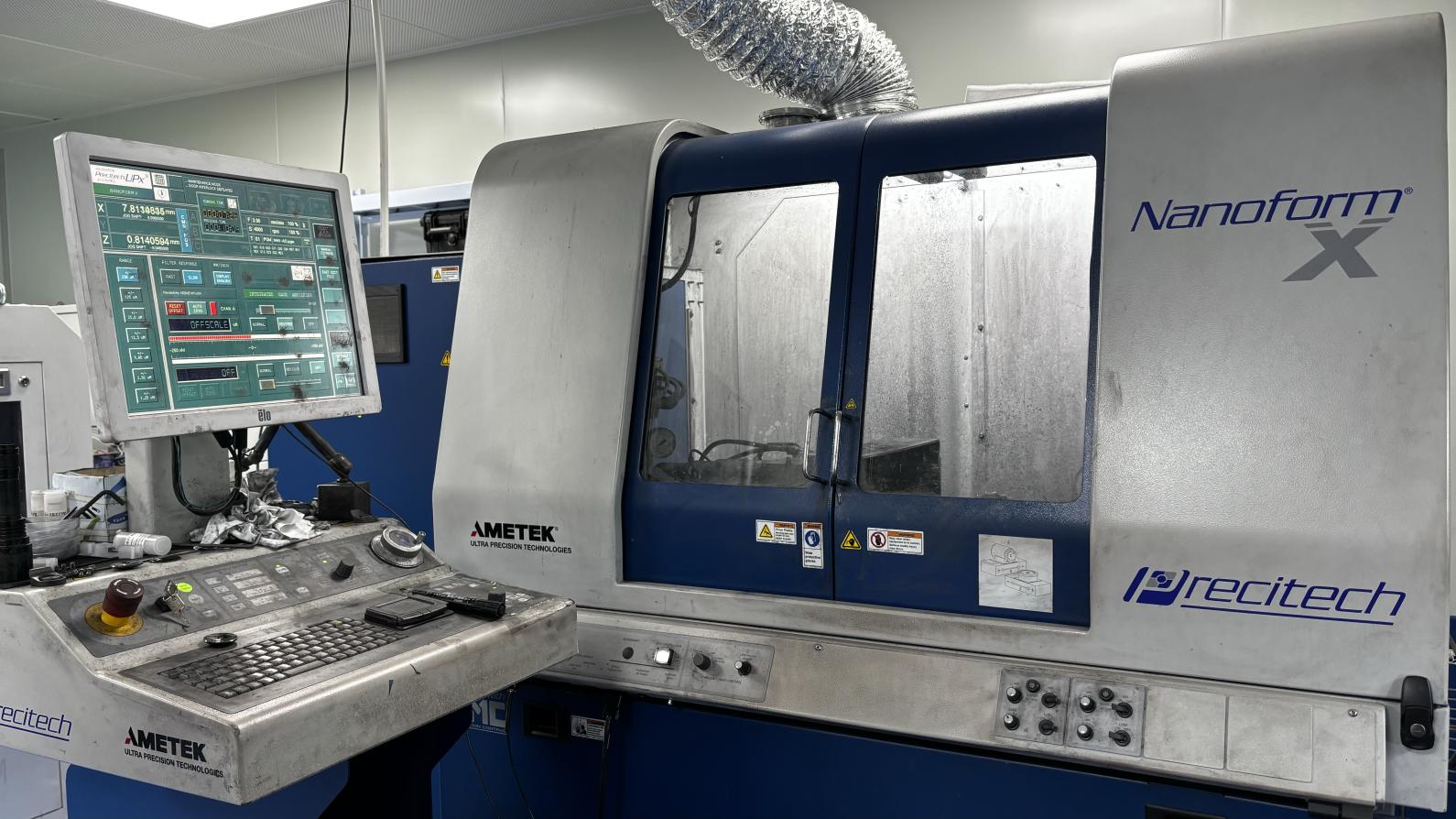
Advanced Laser Profilometry ensures that all compliance press-fit pins are aligned within a tolerance band of <0.10 mm, preventing damage during host PCB assembly.
Different regional and commercial sectors present unique operation requirements for 2xN Stacked SFP port architectures. Understanding these distinct localized scenarios allows Transolix to adjust customization options for various enterprise applications:
Essential technical answers regarding mechanical fit, signal integrity, and global sourcing of 2xN SFP Cages.
Our catalog includes high-performance EMI-shielded and ZQSFP+ stacked designs. Review our range of products engineered for reliable high-speed data transmission:
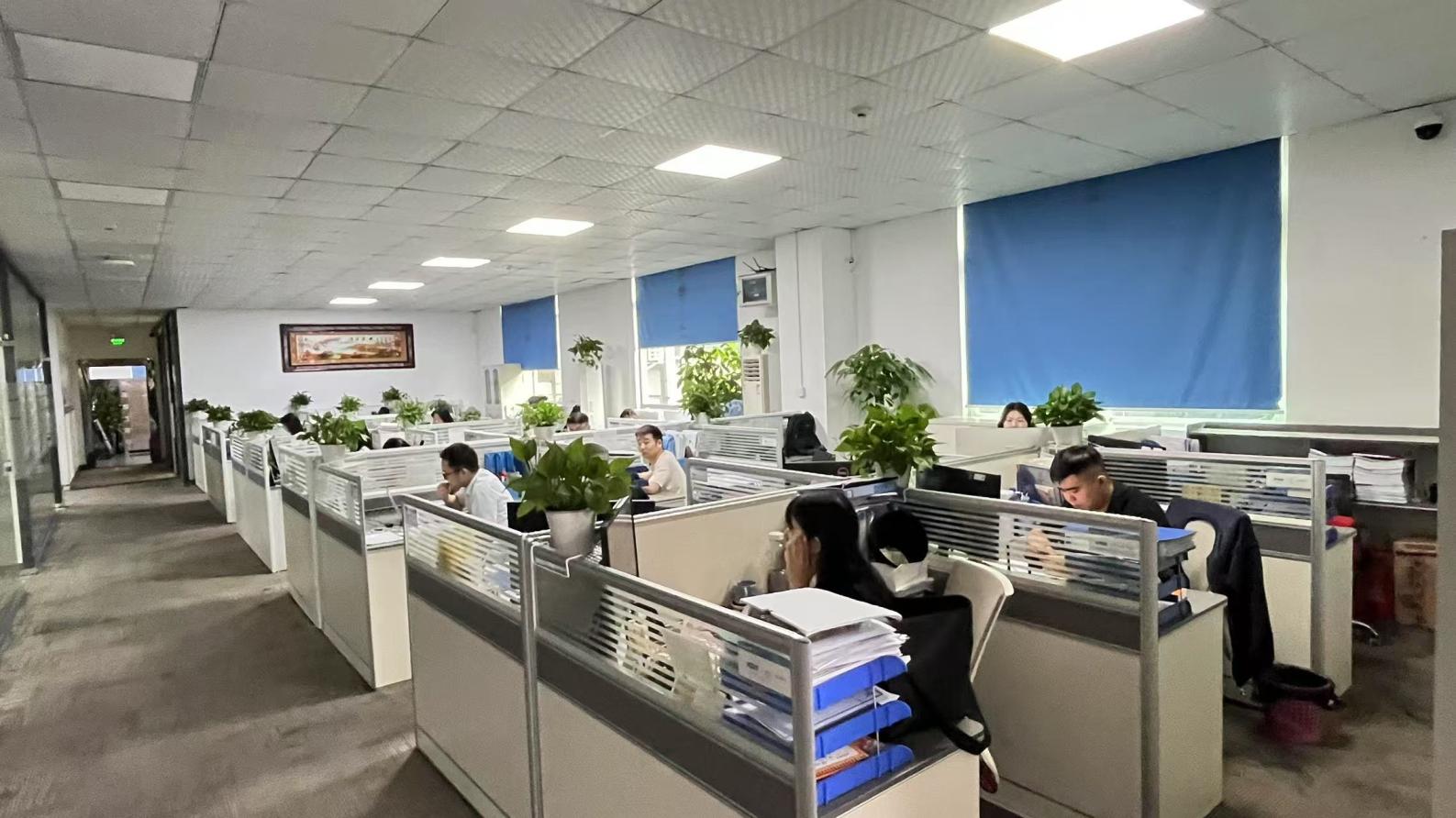
Our production processes prioritize precision, utilizing advanced manufacturing machinery and clean-room assembly lines to deliver high reliability across our SFP cage and optical transceiver modules:


 Transolix